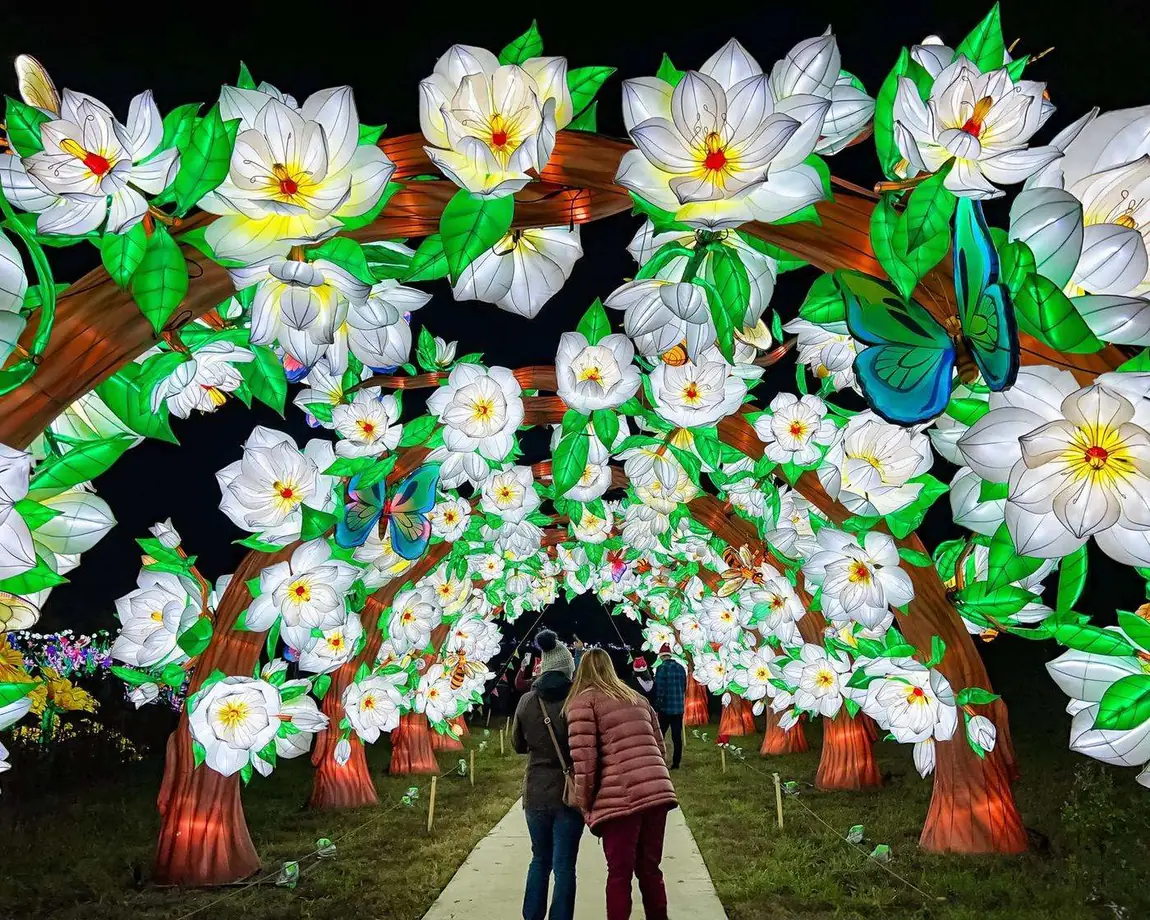
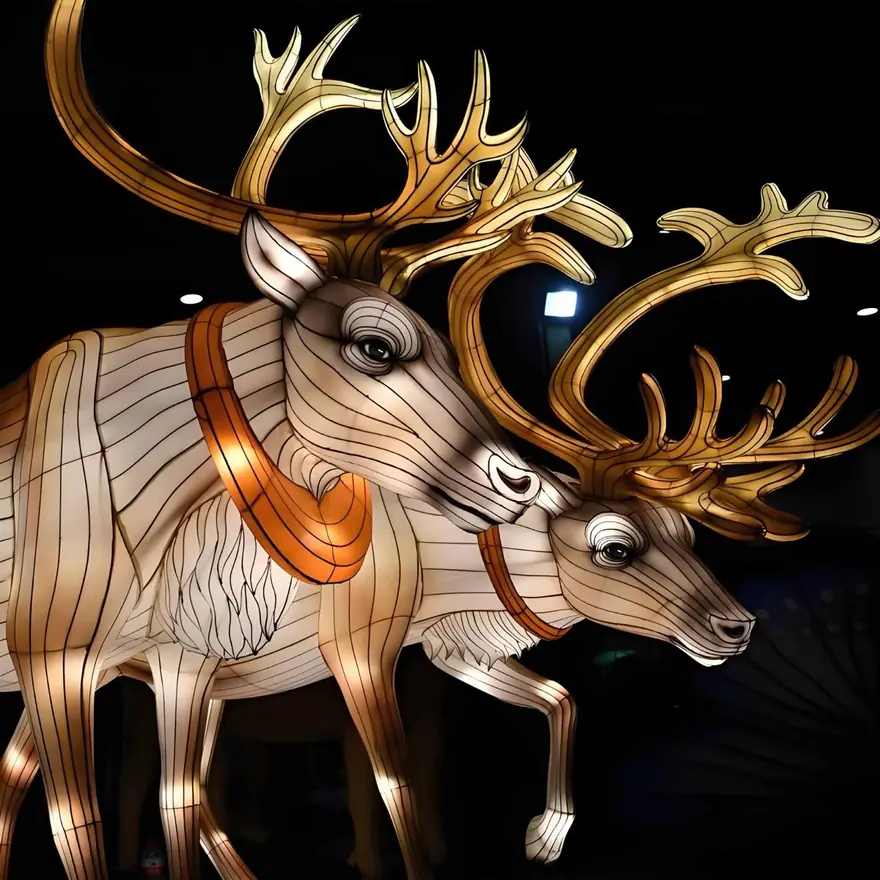
A string of fairy lights is pleasant. A four-metre reindeer you can stand next to is a photograph, a souvenir and the reason a family chose your trail over the one twenty minutes away. That gap is why zoos, parks and estates across Europe and North America now build their Christmas light trails around themed lantern scenes instead of treating lighting as the whole show. The economics follow: light trails run 30–50 nights, and the venues that fill midweek dates are the ones giving visitors something new to walk toward every few minutes.
A Layout That Moves Crowds
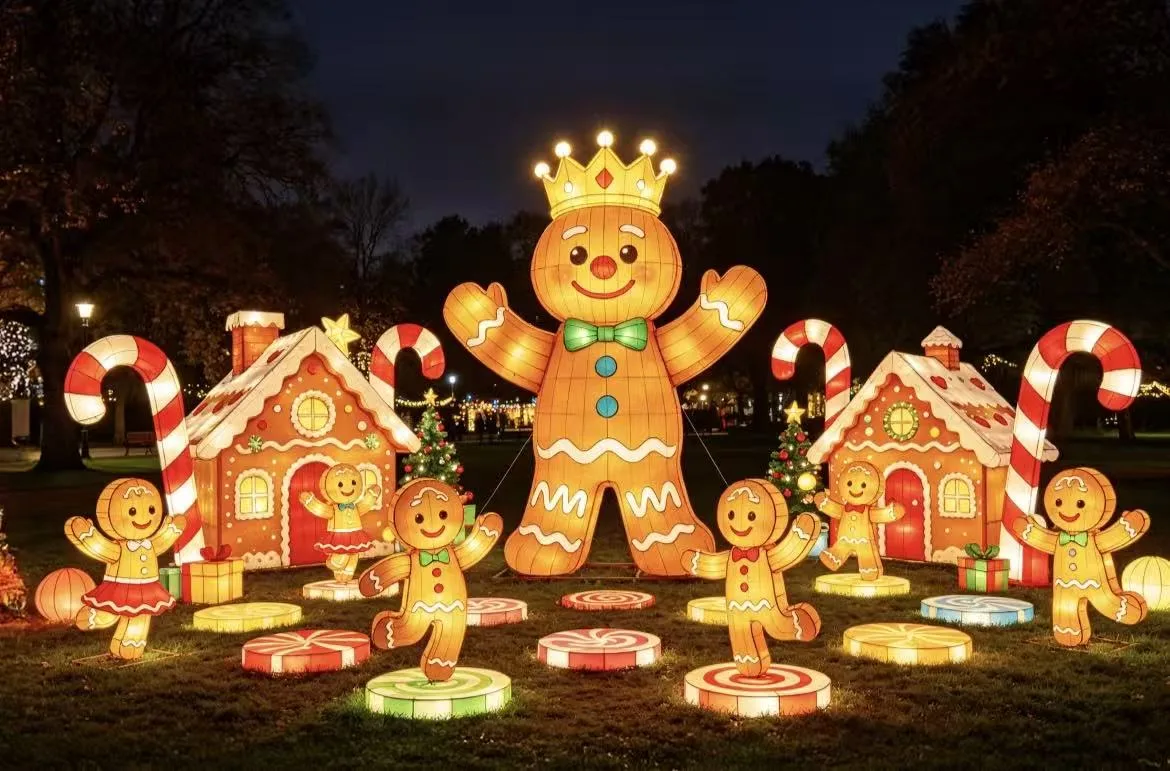
The best-performing trails share a simple pattern: one-way flow, a decision-free route, and a landmark scene roughly every 100–150 metres. Landmarks do two jobs, they pace the walk and they create the queue-worthy photo spots that market next year's event for free. Place your largest figure at the halfway point, not the exit; visitors who photograph at minute twelve post at minute thirteen. Corners and clearings suit immersive scenes best, as our winter sports figures and gingerbread displays were each built to fill a specific bend or courtyard rather than a catalogue slot.

Winter Builds Survive the Season
December is the wrong month to discover your supplier built for a dry autumn. Every outdoor figure we ship for Christmas trails is engineered for the season it will meet: IP65-rated LED modules, flame-retardant silk, anti-rust coatings, and steel engineered for wind load at the venue's real exposure, a hilltop estate and a sheltered city park are different engineering briefs. Snow load matters for horizontal surfaces, and drainage matters more than buyers expect; a figure that collects meltwater in its base becomes an electrical problem by January. Ask any supplier to document all of it in writing before fabrication starts.
Order by September, or It Becomes Next Year's Plan
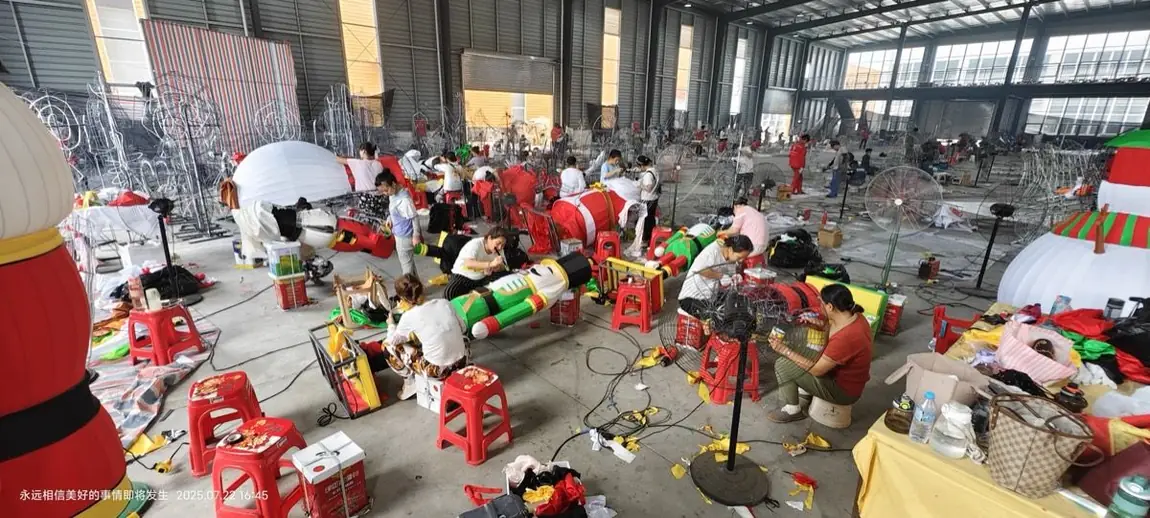
Lantern manufacturing is a handcraft pipeline, and the Christmas calendar does not bend. Design and render approval take two to three weeks, fabrication runs 45–60 days, sea freight adds 30–40 days to Europe or North America, and installation needs one to two weeks on site. Count backwards from a late-November opening and the order window lands in early September, which is, not coincidentally, when our workshop floor fills with snowmen and reindeer. Venues that commit by mid-September get full fabrication slots; enquiries that arrive in October are usually quoted for the following season.
If a Christmas trail is on your 2026 plan, browse our holiday displays for scene ideas, or read how cities are investing in the nighttime economy more broadly. Where a town centre or council is scoping a city light programme that runs beyond the Christmas window, our city solutions page covers routing, approval boundaries and multi-year reuse. For a timeline mapped to your opening date, contact our team early, the fabrication calendar, unlike the season, does not extend.