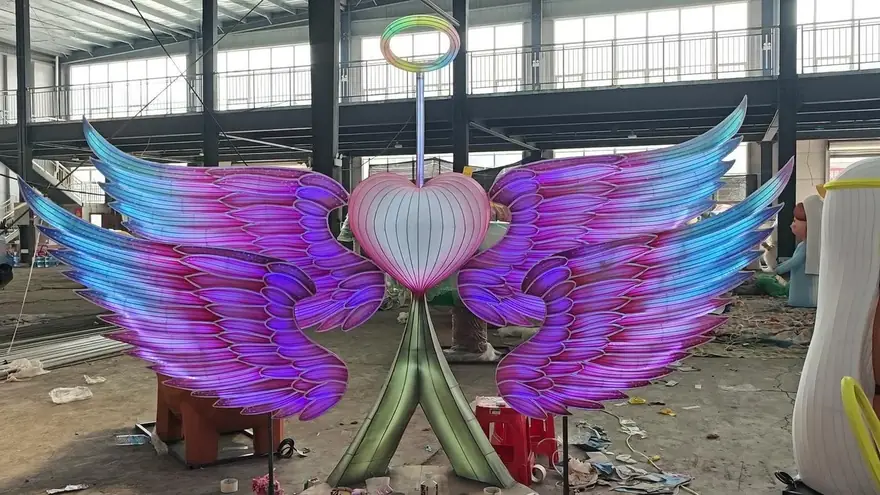
Custom City Lantern Festivals & Municipal Light Shows
Turn public space into a destination after dark. We design, engineer and deliver large-scale lantern festivals for squares, streets, waterfronts, cultural districts and civic green spaces, built around the way your city actually operates.
What a city lantern festival actually is
A city lantern festival is not a larger version of a decorative installation. It is a planned public event built from many physical lantern and light structures, arranged along a route that runs through space the public already uses every day. Where a single piece is a photo spot, a city programme is a sequence: an arrival point, a series of areas with their own character, and a place for the evening to end. The same definition holds whether the commissioning body calls it a city lantern festival or a municipal lantern festival, and whether it is run by a parks department, a tourism office or an events team.
That changes what the project has to answer. A piece sited in a plaza has to work with the widths people actually walk, the access emergency services need, the surface it stands on and the calendar the city runs on. The design question is not only what the installation looks like, but where it can stand, how people move past it, and what happens to it after the season ends.
- —A route through public space, not a single fenced attraction
- —Physical structures that are engineered, transported and installed
- —A seasonal or recurring programme rather than a one-off object
- —An evening destination that works alongside the city's daytime life
Because it is delivered as a project rather than a product, it is scoped the way other public infrastructure is scoped. See how a full project is delivered, from concept through to removal.
Where city light programmes work best
Different public settings ask different things of an installation. The same structure that fills a square can be wrong for a narrow street, so the setting is treated as a design input from the first conversation.
The widest public ground, and the natural place for a landmark centrepiece that anchors the whole programme.
Light corridors and overhead installations that extend an evening walk and give frontage a reason to stay open later.
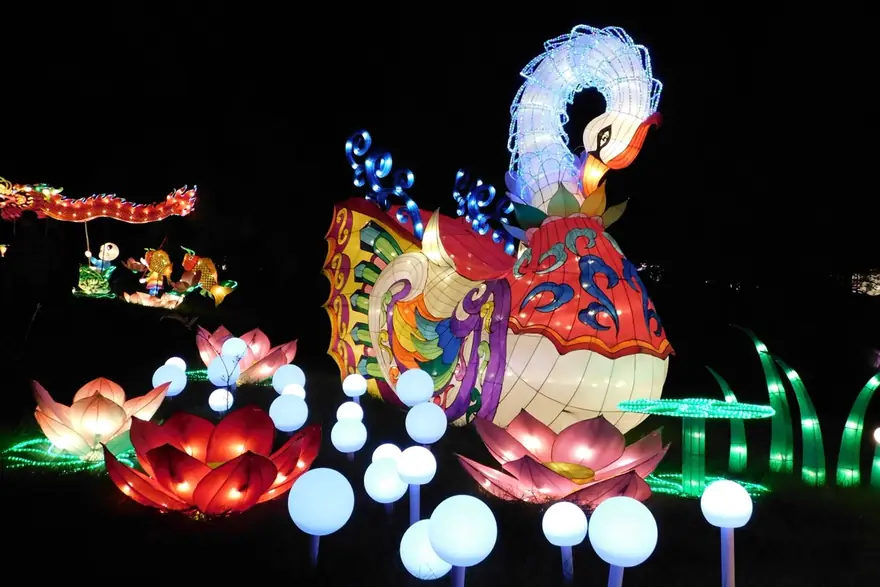
Reflection doubles the effect of any piece, and a linear promenade gives a route an obvious direction.
Themes drawn from local history, architecture or city symbols, sited against the buildings they refer to.
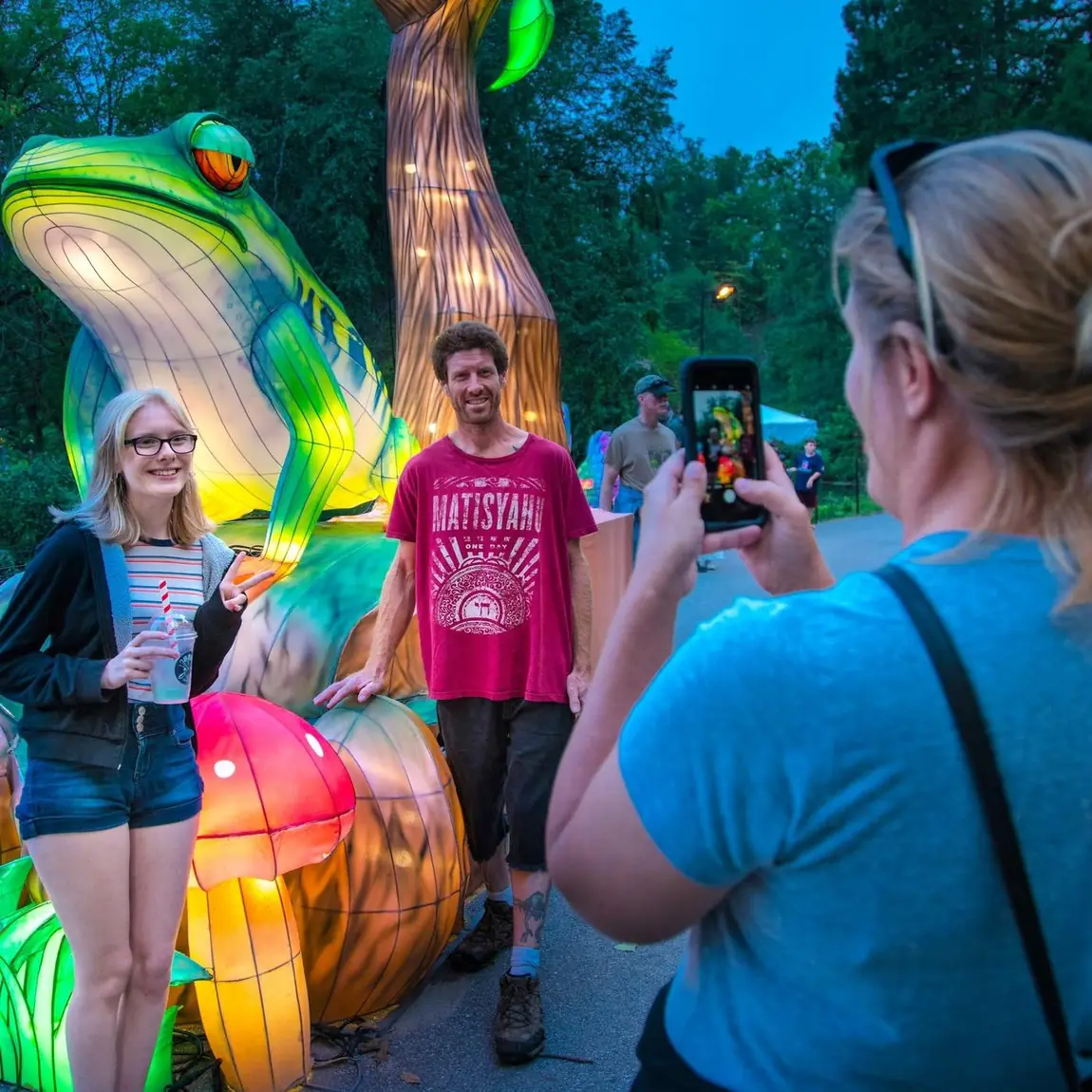
Routes through planted ground, where path widths, tree cover and lawn protection shape what can be built. This is where a public park lantern festival or a city park light festival is most often sited, and where the ground conditions matter most.
Arrival moments at stations and main approaches, which set the tone before visitors reach the main route.
Most programmes combine several of these. A city light festival might open at a transit gateway, run through a retail street and finish at a waterfront, with the theme carried across all of them. That continuity is a planning decision, not an accident, and it is what makes the route read as one event rather than unrelated objects. Working across more than one setting in a single season is what distinguishes a lantern festival for cities from a single-site attraction. Public-space work sits alongside our custom landmark builds, which is where city-scale centrepieces are developed.
What a municipal project has to satisfy
Public projects carry obligations that a private venue does not. The ground belongs to the public, the site has other users, and the authority commissioning the work answers to residents and to its own governance. Those conditions are treated as fixed requirements rather than as obstacles to work around.
The practical constraints that most often shape a city programme:
Our approach is to collect these before design starts, so the first concept is already buildable in your setting. A design that ignores the site conditions produces a beautiful render and a difficult installation, and the cost of discovering that late falls on the project.
Where a project spans several departments or stakeholder groups, the documentation is prepared so it can be circulated and reviewed rather than translated into someone else's format.
Large-area routes and multi-zone layouts
A city programme is usually too large for a single site, so it is organised into zones: separate areas, each with its own theme and its own cluster of installations, connected by a route that visitors can follow in an evening. Zoning is what keeps a large footprint legible instead of turning into a scattered collection of pieces.
Each zone is planned around four questions: how visitors arrive at it, what the sequence of installations is once they are inside, where they naturally pause, and how they leave for the next zone. Getting those right is what makes a route feel designed.
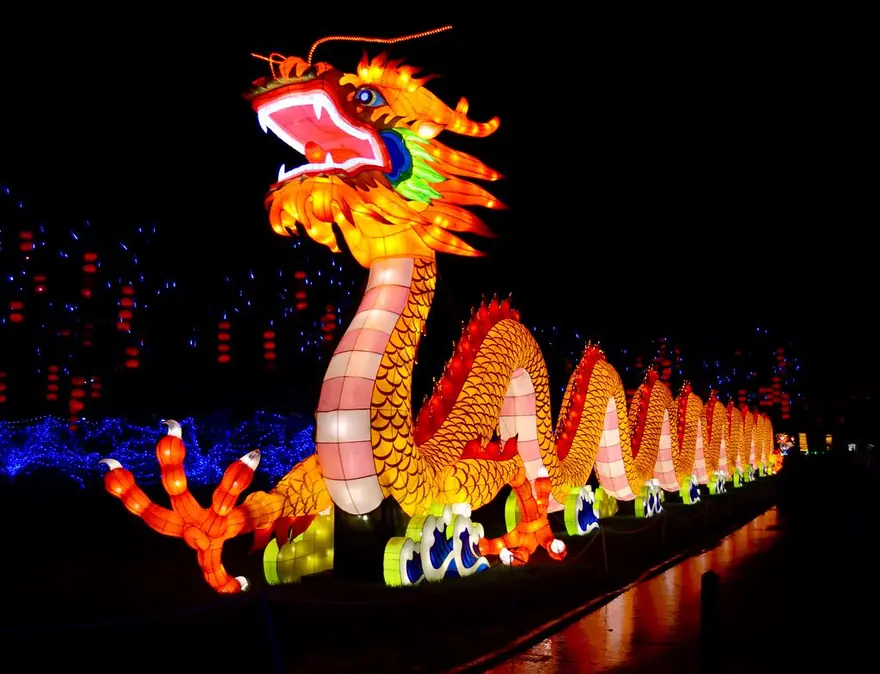
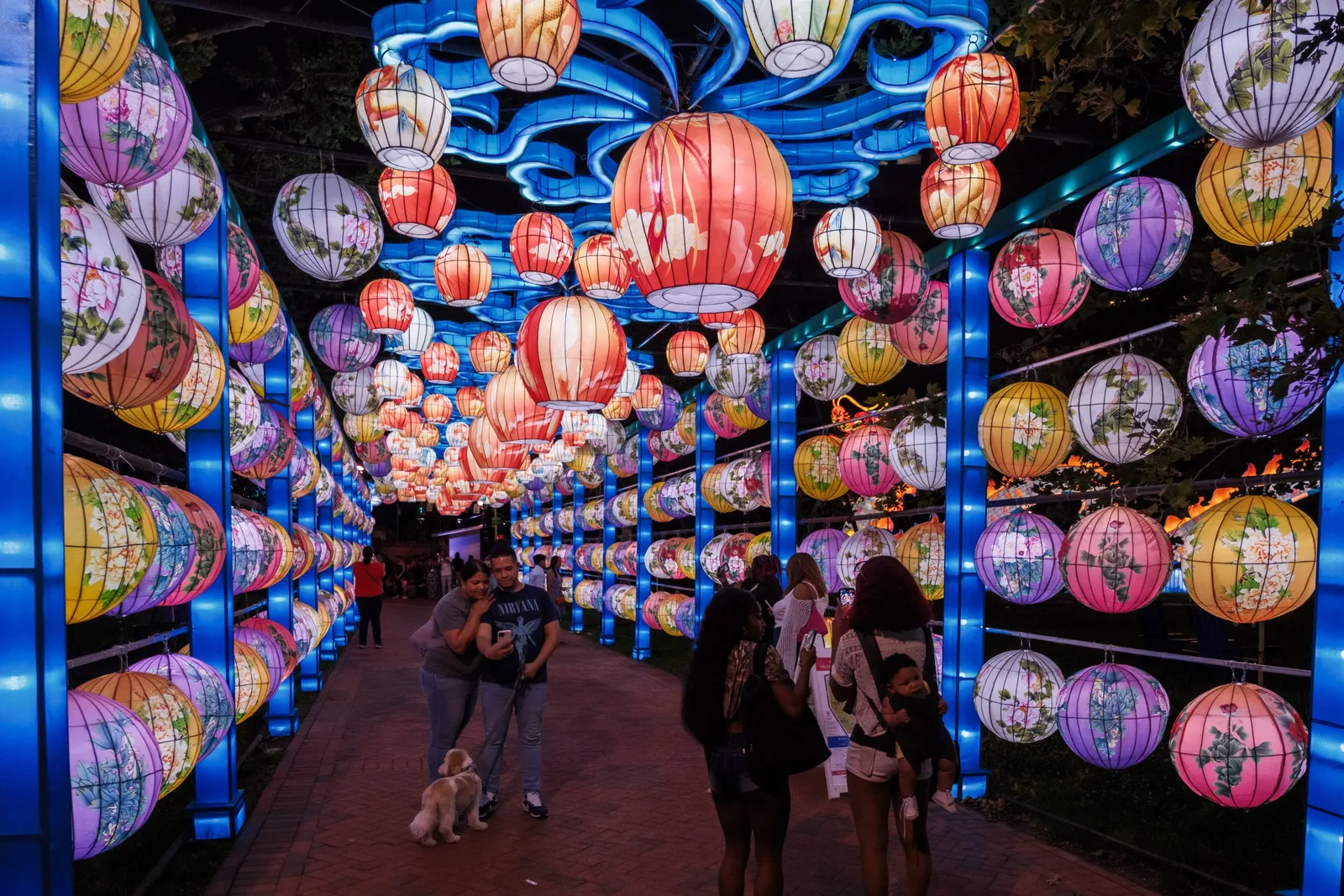
Route length is set by how much walking is reasonable, not by how many pieces can be made. A shorter route that flows usually serves a city better than a long one that thins out. Where a site is genuinely linear, the route can also run in one direction and finish near transport, which simplifies the end of the evening. The same route thinking is applied to a single-venue programme in our public park light trail case study, where a modular tunnel and themed scenes were routed through an existing park.
Public safety, crowd flow and approval boundaries
An event in public space brings people together at a scale a private venue controls with tickets and turnstiles. In a square or a street, visitors arrive from several directions at once, at times the city does not choose, and the site has to remain safe for people who are not attending the event at all.
Crowd flow is therefore treated as a design constraint from the start. Where an installation narrows a passage, where a cluster of pieces invites people to stop, and where a route crosses a working street are all resolved at planning stage rather than adjusted on site.
- —Clear widths maintained through every part of the route
- —Escape routes and emergency vehicle access kept unobstructed
- —Gathering points sized to the crowds the site is expected to hold
- —Separation from traffic, tram lines and other working infrastructure
Approval, permitting and safety sign-off remain the responsibility of the relevant local authority and its own processes. What we provide is the technical material those processes need: structural drawings, load information, electrical layouts, material specifications and installation method statements, prepared so they can be reviewed by your authority and its appointed engineers.
We do not act as the approving body, and we do not represent a project as approved. Where local rules require a licensed local contractor or engineer to sign off on site, that role sits with the local party your authority appoints, and we work alongside it.
The practical effect is that the technical work you need for review is produced as part of the project, in a form that can be handed over. See the documentation and engineering stages, or read how a risk assessment, method statement and load documentation package fits together on an outdoor light installation.
Installation and removal windows
For a city, the hardest part of a light programme is often not the event itself but the days around it. Space has to be given over to the build, then returned to normal use, and both transitions happen in public view. Working to a calendar the city sets, not one we prefer, is part of the scope.
Two dates matter more than any other: the day the site can be handed over for build, and the day it must be clear again. Working back from the opening date and forward from the clearance date defines the window the project has to fit inside.
Site survey, access routes, power positions and delivery scheduling agreed in advance.
Sequenced so the public keeps as much of the site as possible, and delivered in the order the route opens.
Removal, surface reinstatement and storage, planned from the start rather than improvised at the end.
Where a city needs a short build, that requirement is designed for: fewer, larger pieces assembled off site, or modular units that arrive complete and are lifted into position. Where a longer window exists, a more elaborate build can be spread across it. Both are valid; the calendar decides which one the project should be.
Outdoor weather and engineering considerations
Public space is the most exposed setting there is. A piece in a square takes wind from every direction, with nothing to shelter behind, and it stays outside for weeks or months through whatever weather that season brings. That is an engineering problem before it is an aesthetic one.
Wind loading is one of the key constraints that can shape how a large outdoor installation is built. The taller and more open the structure, the more it has to be anchored, and the more the ground conditions matter, because public space rarely allows deep foundations. Ballast, surface-mounted bases and anchoring methods that suit paving or grass are all part of the design.
Specifications are developed for each installation and destination rather than issued as one fixed sheet, because a structure in a coastal city and one in a sheltered inland square are not the same problem. The engineering behind this is the same work described in our factory tour, where the six in-house production stages run from technical drawing to art treatment.
For green spaces specifically, lighting choices are also made with wildlife and planting in mind, using low-glare, contained fittings and adjusted angles and hours. That approach is set out in more detail in our botanical garden light show work, which applies the same principle to a living collection.
Designed for multi-year reuse
For public-sector projects, multi-year use can be an important consideration when the programme is being scoped. Whether a programme can return depends on decisions taken while the pieces are being designed, not on what is decided at the end of the first event, when everything is already packed away.
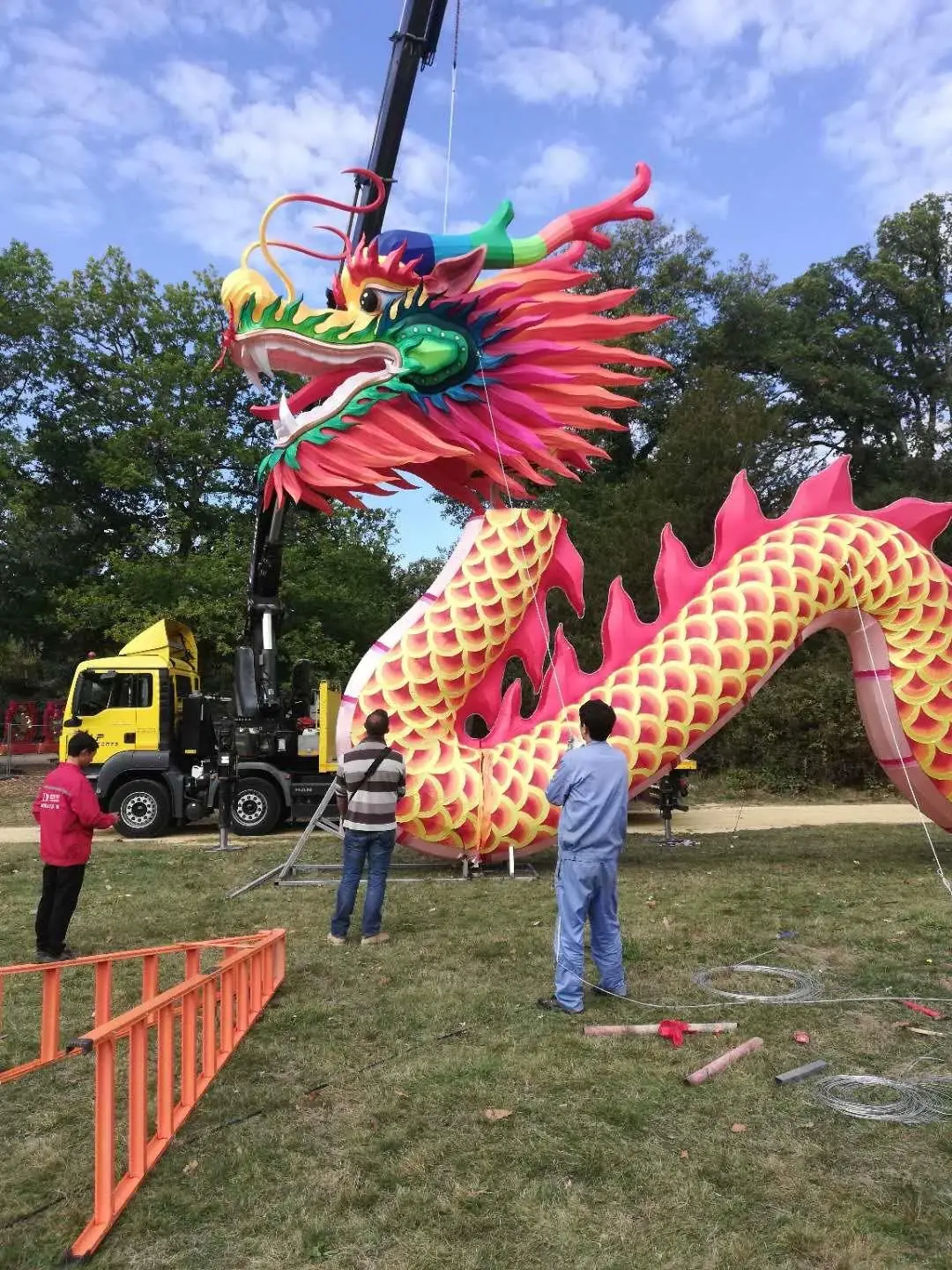
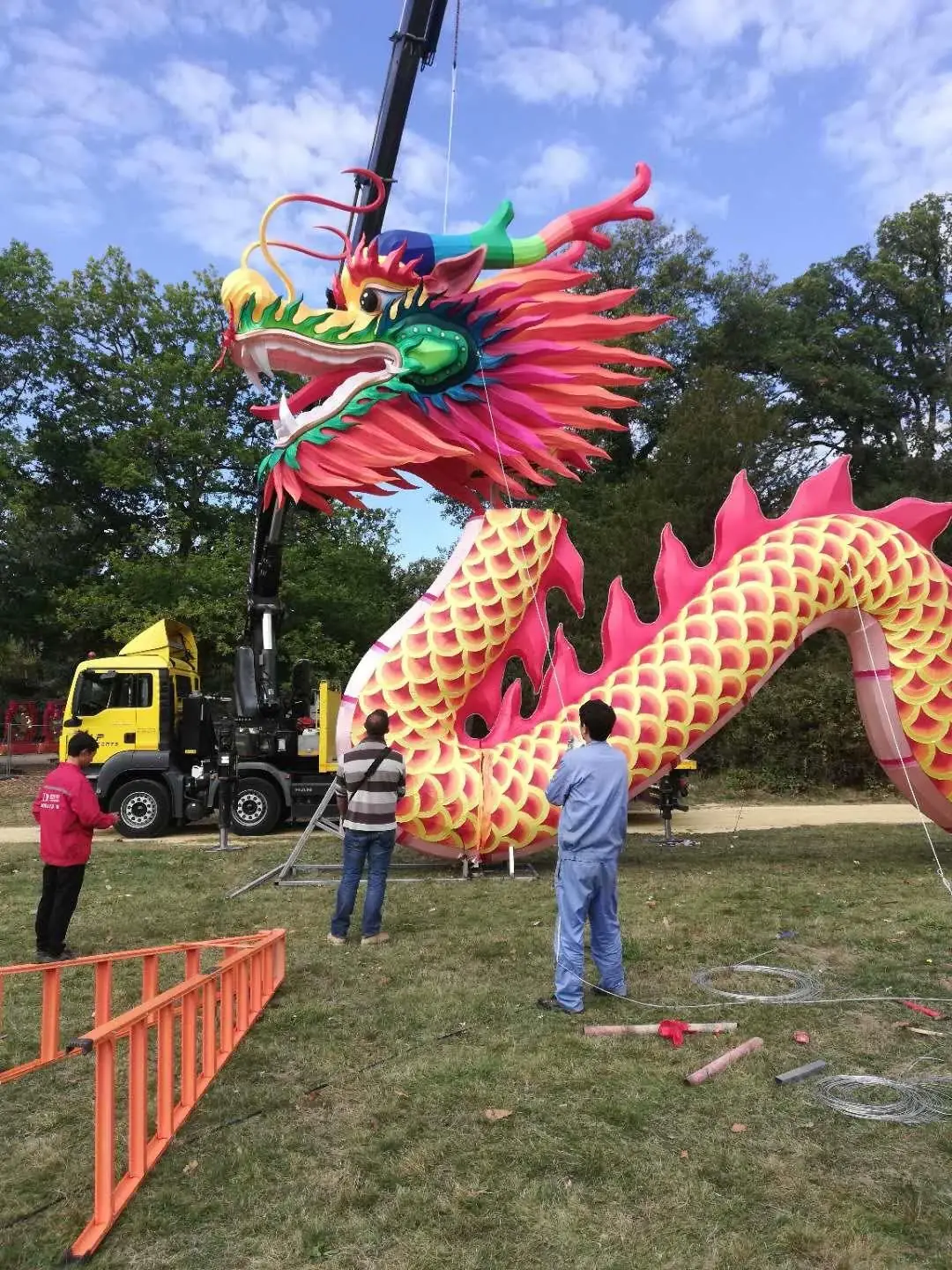
Where the design and scope allow, displays can be built to come back: modular units that store flat, pieces that can be reconfigured into a different layout, surfaces that can be repainted or refreshed, and structures whose fixings were designed to be taken apart and put up again. A 12-Metre Giant Tree, for example, travels as flat-packed trunk and branch tiers that bolt together on site, so the same tree can anchor a square again the following winter.
What we can say honestly is narrower than a sales page usually claims. Not every piece is reusable, not every material holds up indefinitely, and a structure designed for one position is not automatically right for another. Storage conditions, how the pieces were treated in service and the length of the season all change the answer. We set that expectation at brief stage rather than at the end of the event.
Planning for a second season also affects storage. A city that knows a programme will return can plan where the pieces live between events, which is often the difference between a set that comes back in good condition and one that does not. Where reuse matters, we would rather build slightly less and build it to last than maximise the piece count of a single season. A set like the Golden Reindeer Herd is built on that basis: the five figures store as segment frames, with the legs and antlers packed as named parts, so the line can be reassembled and re-spaced for a future season.
City branding and the nighttime economy
Cities commission light programmes for reasons that go beyond the event itself. An evening destination gives residents a reason to come into the centre after dark, gives visitors a reason to stay a night rather than pass through, and gives the city a recognisable image that travels through photographs taken by the people who were there.
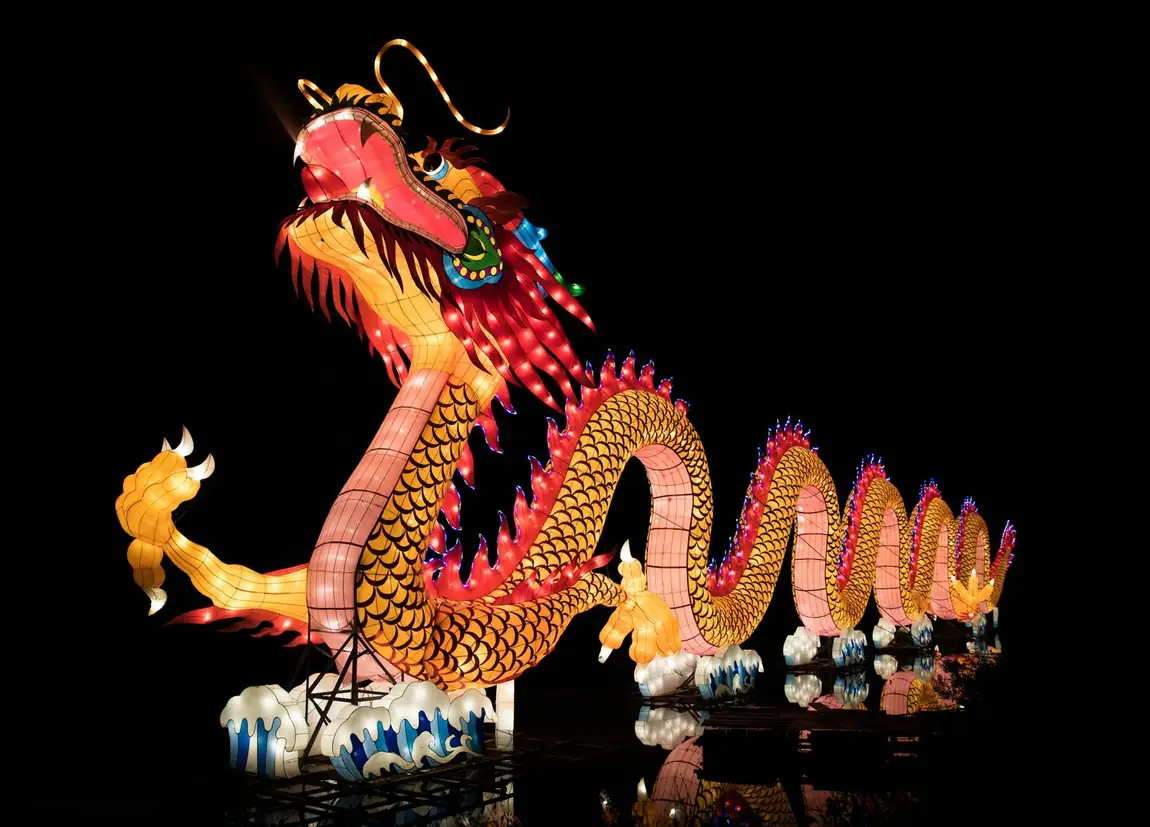
The design side of that is specific rather than general. A piece that stands for a city has to draw on something the city actually owns: its history, its architecture, its symbols, a story particular to the place. An installation that could stand anywhere carries no identity, however impressive it is on the night. One way that plays out is a landmark piece wrapped onto a building the city already knows, as in our Sky-Circling Landmark case study.
A destination that exists only after dark, extending what the centre offers beyond daytime hours.
A planned path that brings visitors past frontage, hospitality and retail rather than around it.
Landmark pieces built to be photographed, carrying the city's identity outward with each share.
A programme that can return in a later year and become part of the city's annual rhythm.
We describe the mechanism rather than the result. Whether a programme changes visitor numbers or spending in a given city depends on the city, the season, the promotion and factors well outside the installation, so we do not attach figures to a design we have not run. The wider case for investing in evening activity is set out in our article on why cities invest in light.
Public-space and civic project experience
Two public-sector projects closest to the scale a city brief asks for, each with the commissioning body it actually was.
City Park Light Trail
A city tourism board needed a winter strategy for a public park that could draw crowds after dark without permanent construction or a multi-year capital programme. We delivered a walkable arch tunnel and themed lantern scenes, built as modular units for multi-season reuse.
Winter Light Festival
A town council wanted to extend its Christmas market into a destination evening event rather than a daytime-only attraction. The programme was designed, built and installed as an evening route that gave the market a reason to stay open later.
Why these two matter here
Both were commissioned by public bodies, both had to fit ground already in public use, and both were built to return in a later season rather than to be used once.
The full write-ups, including how each site was routed, are on our projects page. A closer look at the modular tunnel and themed scene build is in the city park light trail case study, and the market extension is documented in the winter light festival case study.
How a city project runs with us
A public project moves through stages that each end with something you can review, approve or circulate internally. Nothing is built until the stage before it has been signed off.
Site conditions, available ground, event dates, route intent and the outcomes the authority is working toward.
Zone plan, route, theme direction and visuals, developed around the site rather than in isolation from it.
Structural design, wind and load information, electrical layout and the documentation your review process needs.
In-house fabrication and full-scale assembly, with testing before anything is packed for export.
Export packing, shipping and installation on site by our technicians or with remote guidance for your crew.
Maintenance through the season, then removal, storage and planning for a return the following year.
The full chain, including what each stage produces, is set out in our turnkey lantern festival service. Seasonal holiday programmes, which many cities run alongside or instead of a lantern festival, are covered under commercial holiday light displays.
City lantern festival FAQs
A city lantern festival is a large-scale illuminated event staged across public space, such as city squares, pedestrian streets, waterfronts, cultural districts and civic green spaces. It is built from physical lantern and light installations arranged along a planned route, and is usually commissioned by a city authority, a public park operator or a tourism body as a seasonal or recurring programme.
The commissioning side is usually a city or municipal authority, a public park or green space operator, a tourism board or destination organisation, or an event organiser acting for one of those bodies. We work with the commissioning organisation, not with individual visitors.
Local approval, permitting and any related sign-off remain the responsibility of the relevant local authority and its own processes. Within the project we can supply engineering documentation, structural drawings, load information, electrical layouts and material details that your authority and its appointed engineers can review as part of that process.
Yes. Route width, clear escape routes, emergency vehicle access, gathering points and areas that must stay unobstructed are treated as fixed constraints at planning stage, and installations are positioned around them. Safety planning and on-site safety management stay with the venue and the local authority.
It depends on the number of installations, their scale and the access available on site. Installation and removal windows are agreed at planning stage and sequenced around your event calendar, other activity in the area and any restrictions on when the site can be worked in.
Yes. Our installations are built for outdoor use, and structural design, wind loading, electrical systems, weather exposure and maintenance access are considered during project development. Specifications are developed for each installation and destination rather than issued as one fixed sheet.
Where the design and scope allow, modular displays can be stored, reinstalled, reconfigured, repainted or refreshed for a later season. Not every piece is reusable, storage conditions and the length of service both affect the answer, and a structure designed for one position is not automatically right for another. We set that expectation at brief stage rather than at the end of the event.
Yes. Spark Lantern supports international projects and can coordinate manufacturing, packing, export documentation and overseas delivery according to the agreed scope. Installation can be handled by our own technicians, or supported remotely with marked drawings and guidance for your crew.
A city programme is quoted against the agreed scope rather than from a price list, because the number of zones, the size of the installations, the route length and the installation conditions all change the total. We prepare a written quotation with the scope, the technical specification and the delivery stages itemised, and we can supply the documentation your procurement process requires, including company details, technical drawings and stage-by-stage cost breakdowns. Where a project has to be split into phases or a trial zone, that can be scoped and quoted separately.
As the city light festival supplier we can provide an integrated project scope covering design, engineering coordination, fabrication, international delivery and installation support. Permitting, local engineering sign-off and site safety responsibilities remain subject to local requirements and the authority's appointed professionals, and we can supply the technical documentation they review. Delivery terms are confirmed for each project and destination rather than assumed.
Give your city a reason to stay out after dark
Share the public spaces you have in mind, the season you are working toward and the outcome the project needs to serve. Spark Lantern can help turn them into a custom city light programme designed around your city.
Design · Manufacturing · Engineering · Global Delivery · Installation