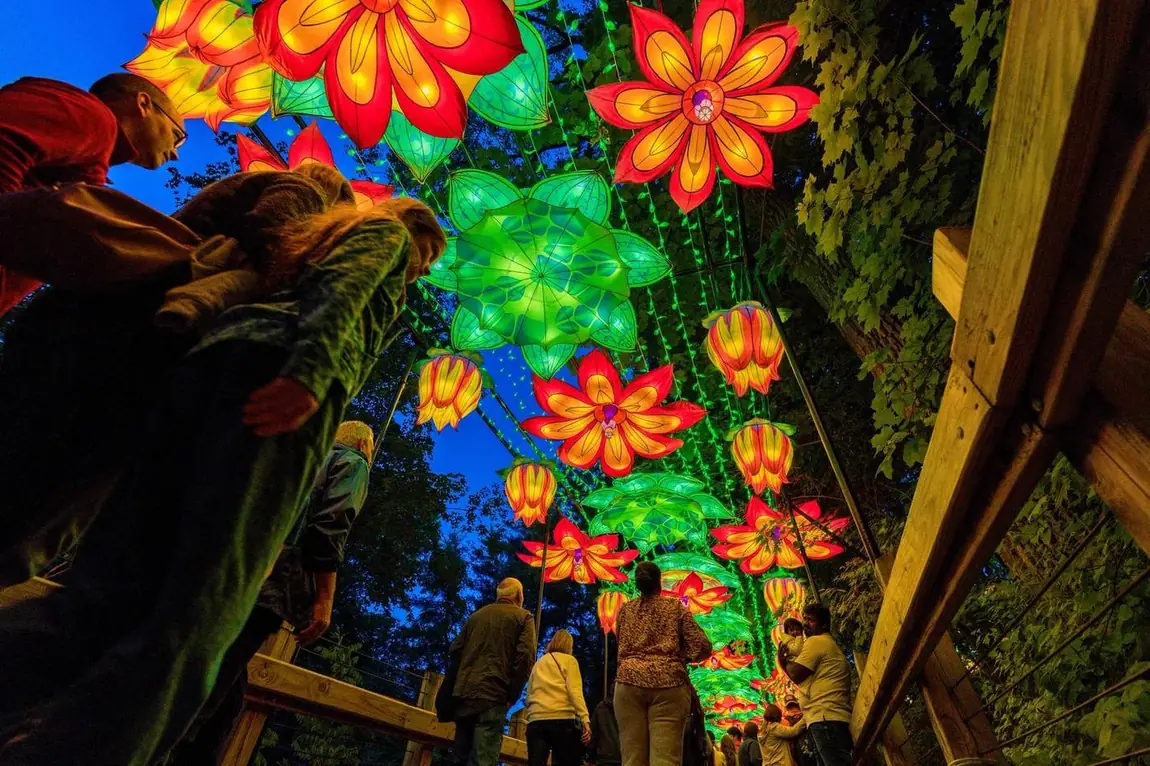
Custom Botanical Garden Light Shows & Lantern Festivals
Grow a light show out of the garden you already have. We design and manufacture flower, plant and nature lanterns that follow your paths and sit within your planting.
Why a botanical garden is made for a light show
A garden is already a designed experience: a route, a sequence, borrowed views and a season that changes what is worth looking at. A botanical garden light show works when it borrows those decisions instead of replacing them with a field of lit objects.
Gardens also hold an advantage a city square does not. Hedges, clipped avenues and mature trees create natural rooms, and rooms create the pacing a night trail needs: a canopy becomes a ceiling, a border becomes a corridor.
- —Open up evening hours in the season when daytime visits drop away
- —Give members and local families a second reason to visit
- —Animate the parts of the garden that go quiet once flowers fade
- —Carry a plant or conservation story into a format visitors stay for
- —Create the kind of photograph people post without being asked
- —Reuse the same collection in a later season instead of starting again
Every garden is different, so every proposal is scoped from the site. Start with the venue and the season and the creative direction follows. See how a full project is delivered.
Designed around your living landscape
The first job is not choosing lanterns. It is reading the garden.
We start from what you already have: site plans, path widths and surfaces, bed layouts, tree positions, sightlines and service routes. From there we propose a route and placements that work with the ground rather than across it.
Practical questions get answered while they are still cheap to answer. Where does a queue form if a piece stops people? Which bed line already offers a natural frame? Will a hedge cut a hero installation in half? Planting that blocks a view by day often makes the better night corridor, and a long slope is usually worth keeping for the view back down the trail.
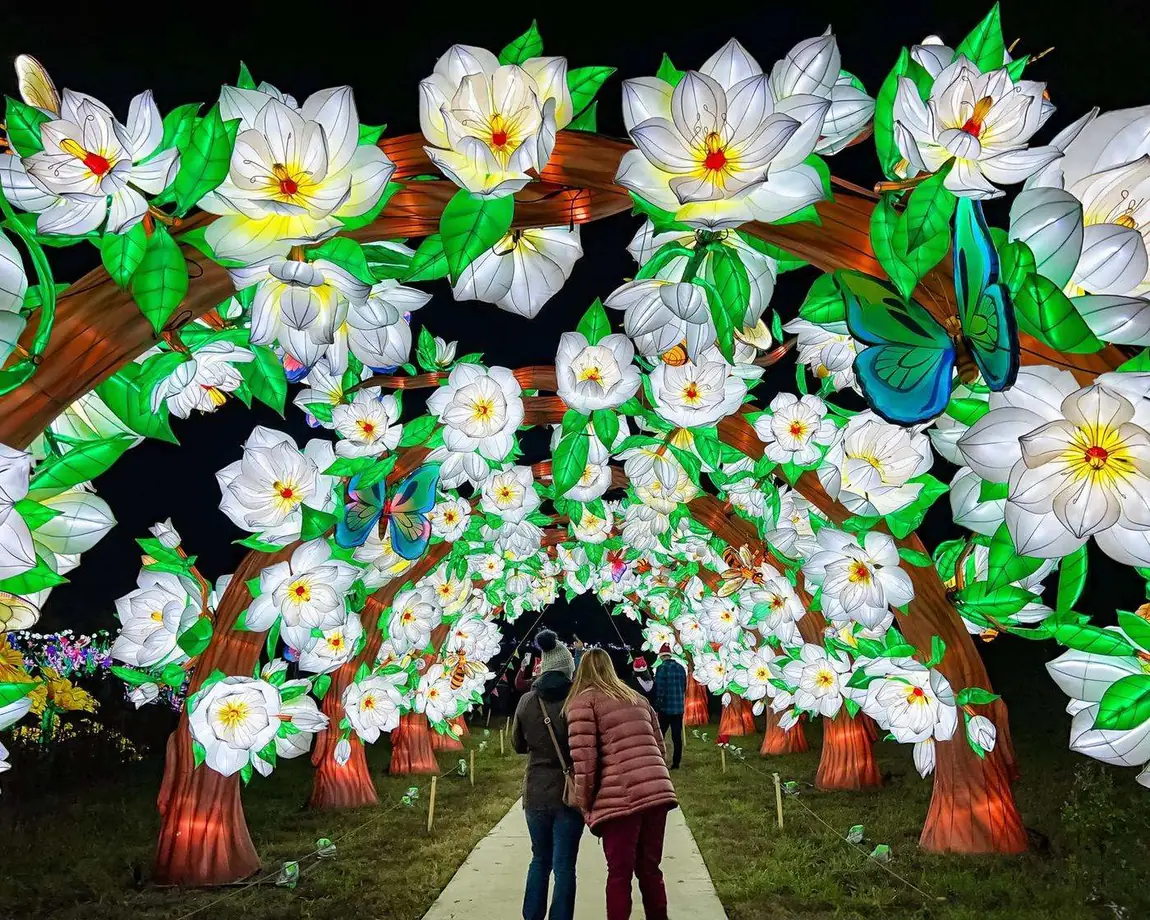
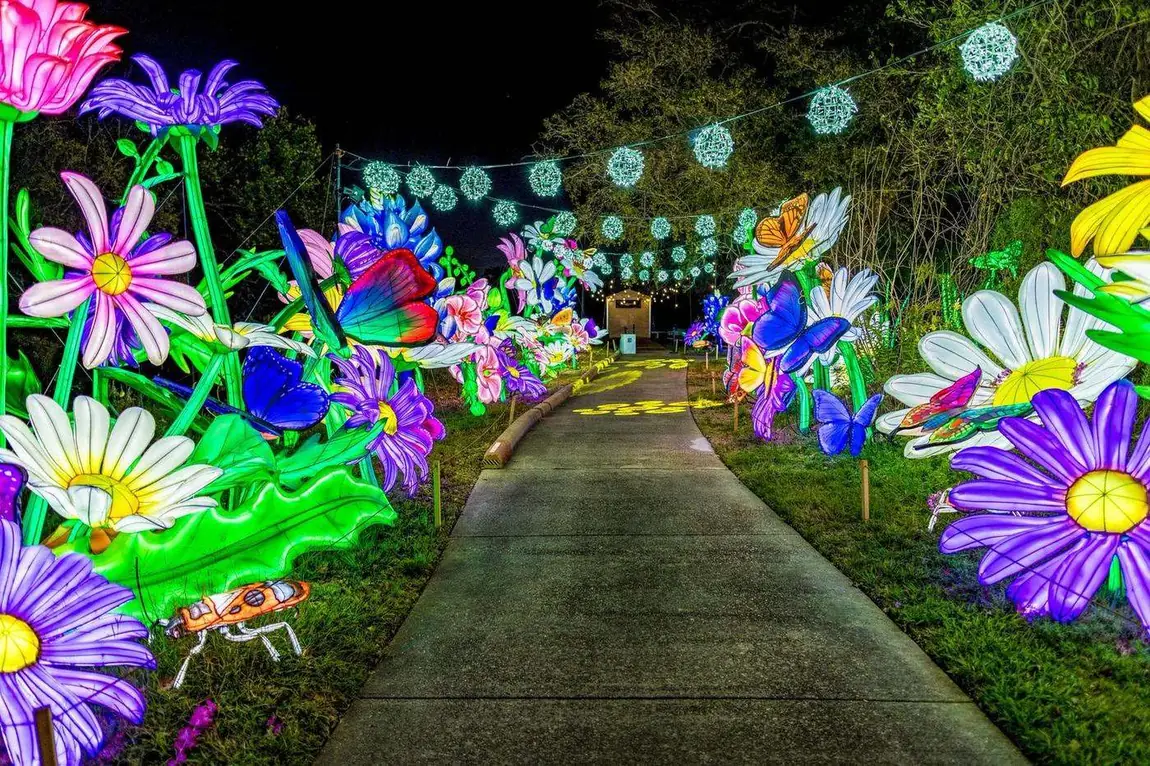
Flower, plant and pollinator lanterns
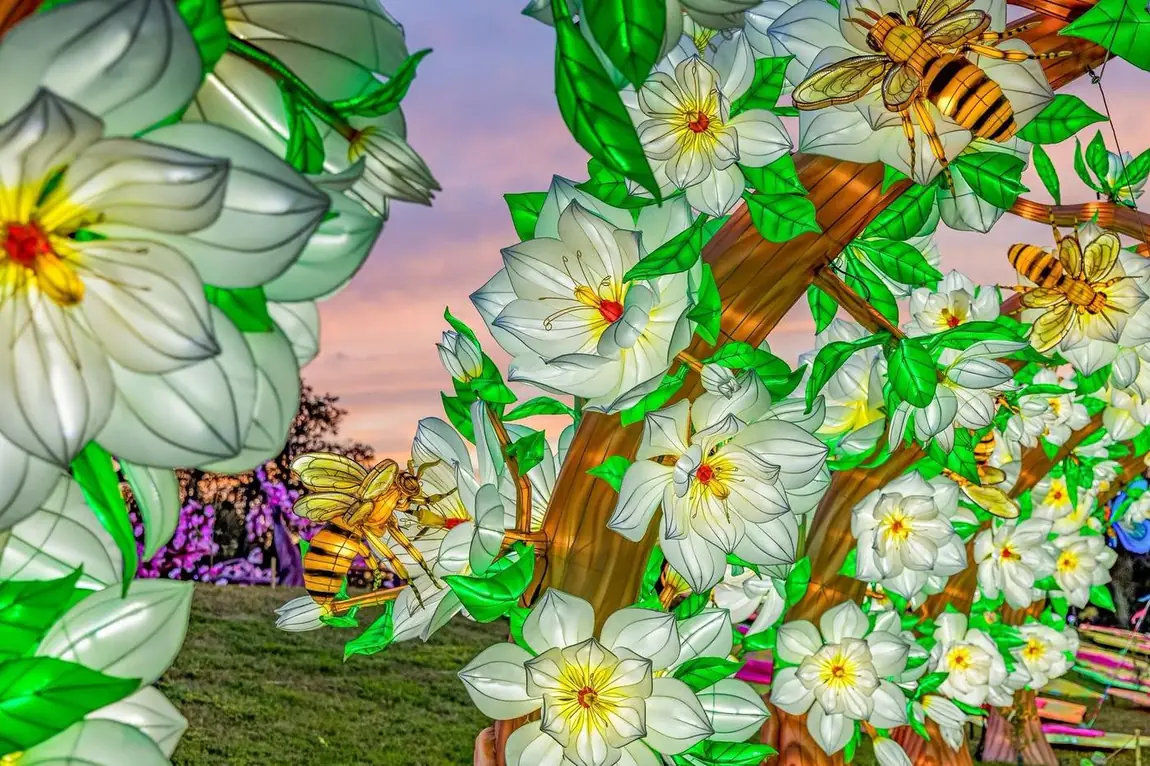
A flower lantern that only works as a glowing shape is decoration. One that holds its silhouette, petal structure and colour with the lights off is a sculpture the garden can be proud of in daylight.
Our workshop builds botanical pieces in steel and silk, hand-painted so the form survives the daytime. A garden light show can include:
If you want the show to reference your actual collection, your team can review the botanical direction before anything is finalised. A garden audience notices a wrong petal count faster than most.
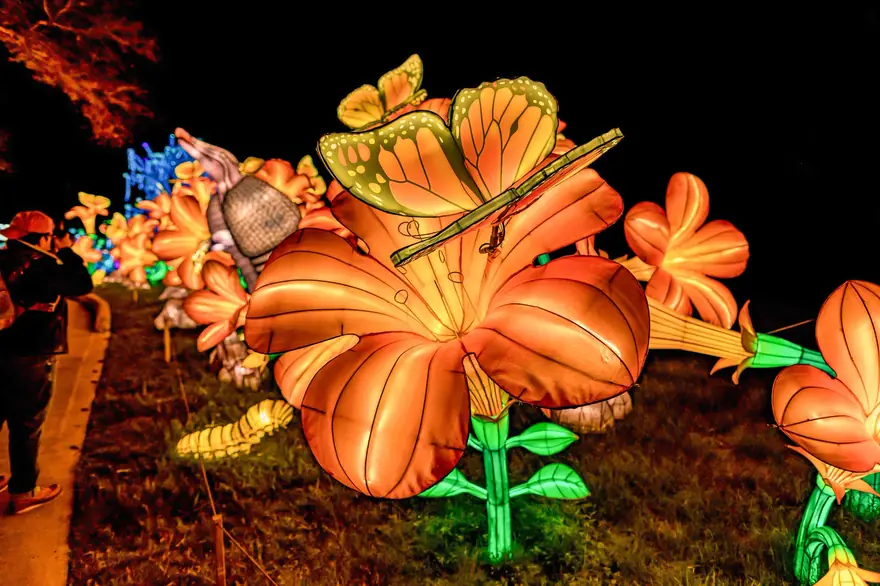

The visitor journey, path by path
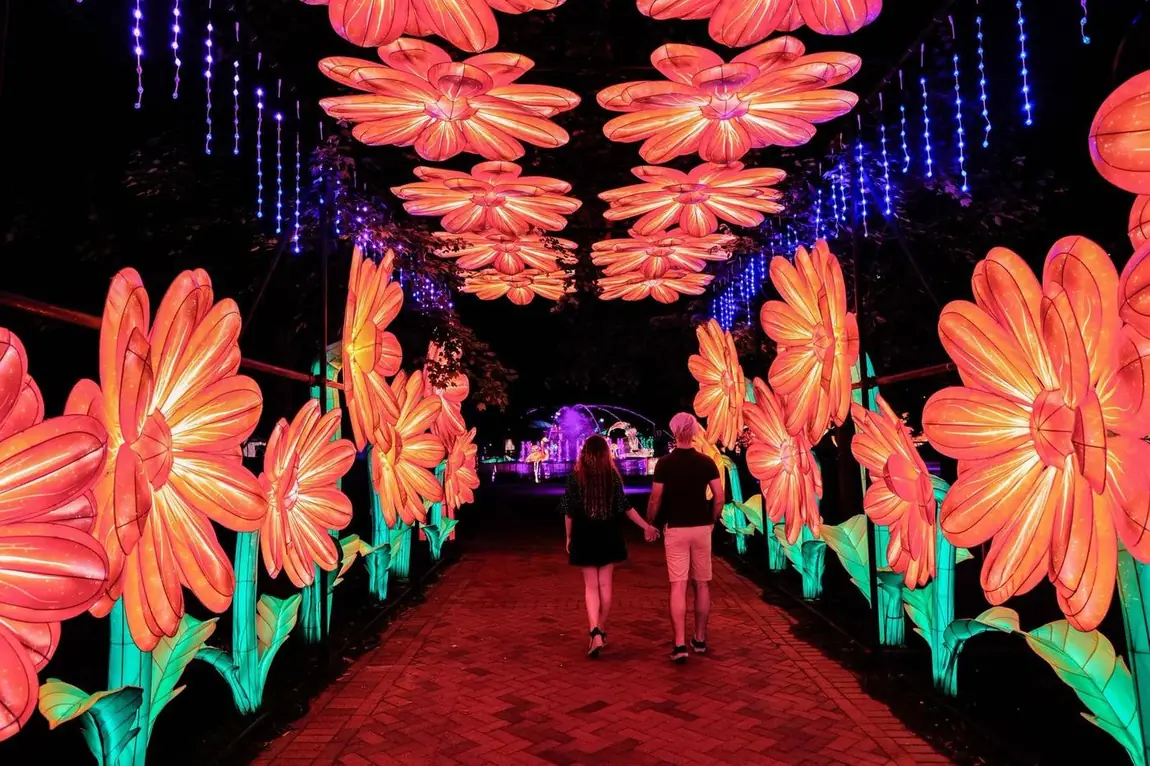
An evening in a garden should have a shape: an opening that says you have arrived, a middle with variety, and a finish that feels deliberate rather than a walk back to the car park.
The sequence below is the working shape of most garden trails we plan. It is a starting point, not a formula, and it gets rearranged to fit the site.
Dwell time is the number worth designing for. A trail that keeps people moving is not automatically a trail people enjoy. Spacing a few pieces further apart, leaving one stretch deliberately dark and putting a slow moment where the garden is at its best does more for the evening than adding another installation.
Accessibility belongs here too. Gradients, surface transitions, rest points and the width left for wheelchairs and pushchairs are checked against your existing paths, so the trail does not quietly exclude part of the audience it is meant to attract.
Working with a living collection
A botanical garden is not a venue with plants in it. The collection is the reason the site exists, and any installation plan has to treat it that way.
The practical consequence is that the horticultural team joins the project rather than being notified about it. Base positions, access routes and working areas are agreed before anything is loaded, and where a structure must sit on planted ground the fixing approach is signed off first.
There is a design benefit in that conversation too. The people who know which tree is fragile and which corner already stops visitors can say where the show should put its best piece.
The detail behind that working method, from reading a root zone and protecting soil to fixing into planted ground without wounding it, is set out in our guide to protecting plants during a light show.
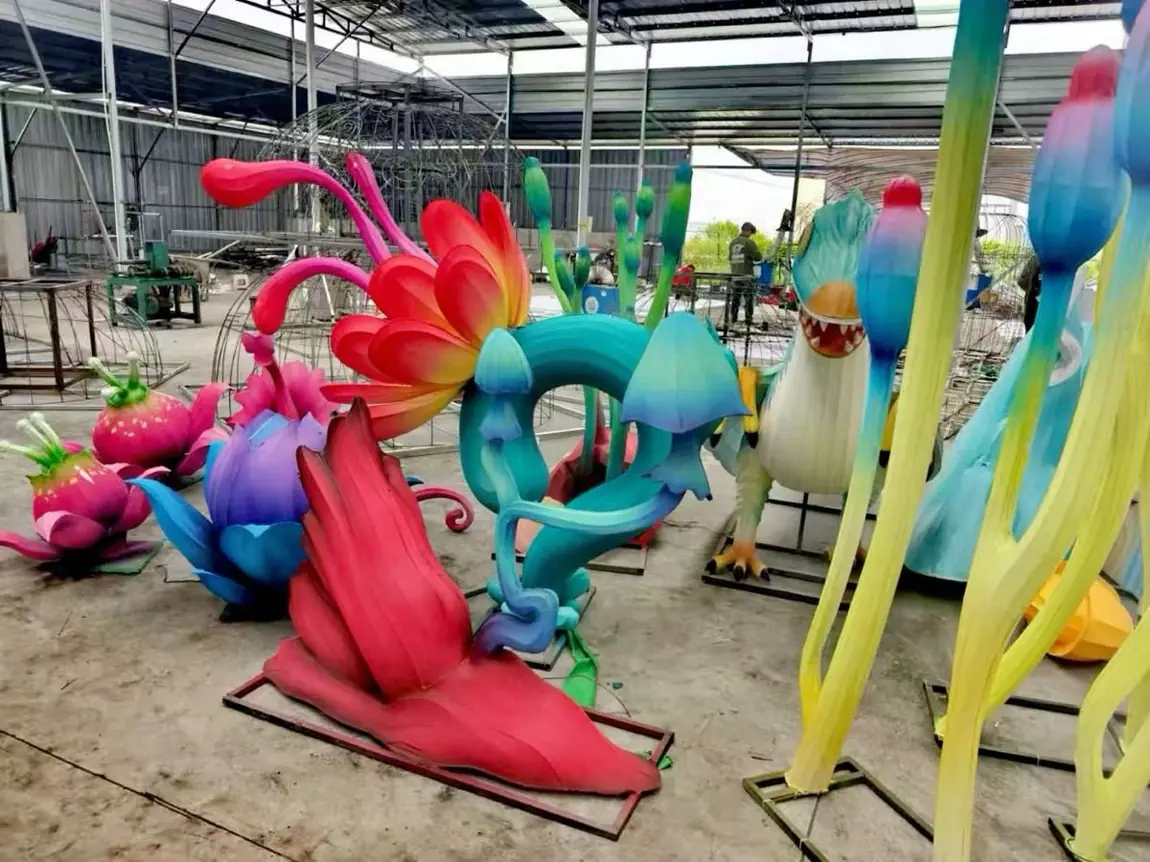
Every botanical piece is built and finished in our own workshop before it reaches a garden. Tour the factory
Outdoor Engineering for Garden Environments
A garden is a harder engineering environment than a plaza, for reasons that have little to do with the weather. Ground is often soft, rooting is shallow in places, drainage matters more than usual, and some surfaces cannot take a heavy base plate at all. Cabling usually has to run without cutting a trench through a bed.
We treat those as design inputs rather than site problems to solve later. Engineering considerations can include:
Technical specifications are developed per installation and per destination rather than issued as one fixed sheet, because an exposed coastal garden and a sheltered inland one do not face the same conditions.
Soft ground, shallow rooting and cable routes that cannot cut a trench are the site constraints that shape the fixing and routing decisions. How those are resolved on a living site is covered in protecting plants during a light show.
From first sketch
to opening night
Eight stages, one team. Design, manufacturing and engineering stay inside our Zigong workshop.
Project Brief
Your garden, planting constraints, available route, event dates and creative direction.
Botanical Concept
Theme, plant and species direction, lantern concepts and a proposed layout on your plan.
Frame and Load Engineering
Concepts translated into manufacturable structures with structural and electrical detail.
Manufacturing
Our artisans frame, shape, light and hand-paint every piece in Zigong, China.
Quality Control
Displays assembled and inspected before packing, so faults surface before shipment.
Global Delivery
Packed for international transport and coordinated to the agreed delivery scope.
On-site Installation
Assembly, positioning and electrical connection, sequenced with your horticultural team.
Opening Night
The garden becomes a different place once the light drops and the trail switches on.
A light show shaped for your garden
No two gardens ask for the same show. A compact walled garden may want one concentrated loop with two or three strong pieces. A large estate garden may want a long route split into zones, each with its own planting reference, plus rest points where people can sit.
Because of that, we do not offer a fixed botanical garden light show package. Each proposal is developed against factors such as:
Send us your garden plan, your dates and the story you want the show to carry. We will come back with a shape for the project rather than a catalogue page.
Garden and nature-inspired project experience
These are the two closest settings in our portfolio.
City Park Light Trail
A city tourism board needed a winter strategy for a public park that could pull crowds after dark without permanent construction. We delivered a walkable arch tunnel and themed lantern scenes, built modularly for multi-season reuse. It became the city's most-shared winter attraction that season.
Themed Garden Lanterns
A hospitality destination in the Gulf region needed a cultural light experience that respected local themes, with the programme handled end to end. We built custom cultural lanterns with heat-adapted engineering and managed shipping and on-site installation. Delivered on brief and on time, it is now the destination's core winter asset.
Why these two matter here
Both were scoped from the site, both avoided permanent structures, and both were designed to be taken down and reused. Those are the decisions a botanical garden brief turns on.
"From the first render to switch-on, communication was clear and the quality matched the samples. Our light trail became the city's most-shared winter attraction that season."
Programme Lead, City Tourism Board · North America
If your garden has a collection or research story the show should carry, tell us at brief stage. Write-ups are on our projects page.
A collection that returns next season
A garden is a long-term institution, so a light show that only works once is a poor use of budget. It should behave like the rest of the site: return, evolve and improve.
That depends on decisions taken at the drawing stage. Pieces that break down into transportable sections can be stored over summer, re-sited on a different route next winter, or combined with new figures without starting again. Removable, repaintable silk covers extend the life of a piece, and a documented breakdown sequence lets your own crew pack and re-erect it.
Seasonal rotation is a creative tool as well. A spring blossom theme and a winter trail can share structural elements while looking like two events, which gives visitors a reason to come twice.
Questions gardens ask before briefing us
Yes. Lanterns can be developed around the species, planting themes, seasonal moments or conservation story that your garden is known for, as well as an overall creative concept. Existing designs may also be adapted depending on the project.
Yes. We work from your site plans, path widths, planting beds and photographs to develop a route and layout that fits the garden you already have, rather than requiring the garden to be rearranged around the installation.
Installation access, base positions and working areas are agreed with your horticultural team during planning, so beds and root zones are identified before anything arrives on site. Where a piece needs to sit on planted ground, the fixing method is discussed with your team first.
Yes. Species, botanical structure and interpretive themes can be built into the design, and botanical accuracy is something we discuss with you at concept stage. Your team can review and correct the reference material before the design is finalised.
Evening programming is usually planned so that daytime operations continue as normal. Where a route needs to stay clear for day visitors, that is treated as a routing and layout question during design rather than a problem to solve on site.
Yes, where reuse is planned from the start. Modular construction, removable covers and a documented breakdown sequence let a collection be dismantled, stored and re-erected, or recombined with new pieces for a later season.
Yes. Spark Lantern supports international projects and can coordinate manufacturing, packing, documentation and overseas delivery according to the agreed project scope. Installation support can be included depending on the destination and project requirements.
There is no fixed price list, because the scope changes so much from one garden to the next. Route length, number and scale of installations, design complexity, engineering for your site, destination and installation scope are reviewed before a quotation is prepared.
Yes. As the botanical garden light show supplier we can provide an integrated scope from concept and engineering coordination through fabrication, export packing and garden light installation support where required. We coordinate installation planning with the garden or venue team so base positions, access routes and protected planting areas can be considered before delivery. A supply-only option is also available where a garden prefers to install with its own contractors.
Give your garden an evening season
Tell us about your site, the route you have in mind, your planting constraints and the season you are planning for. Our team can help shape a botanical garden light show around the landscape you already look after.
Design · Manufacturing · Engineering · Global Delivery · Installation