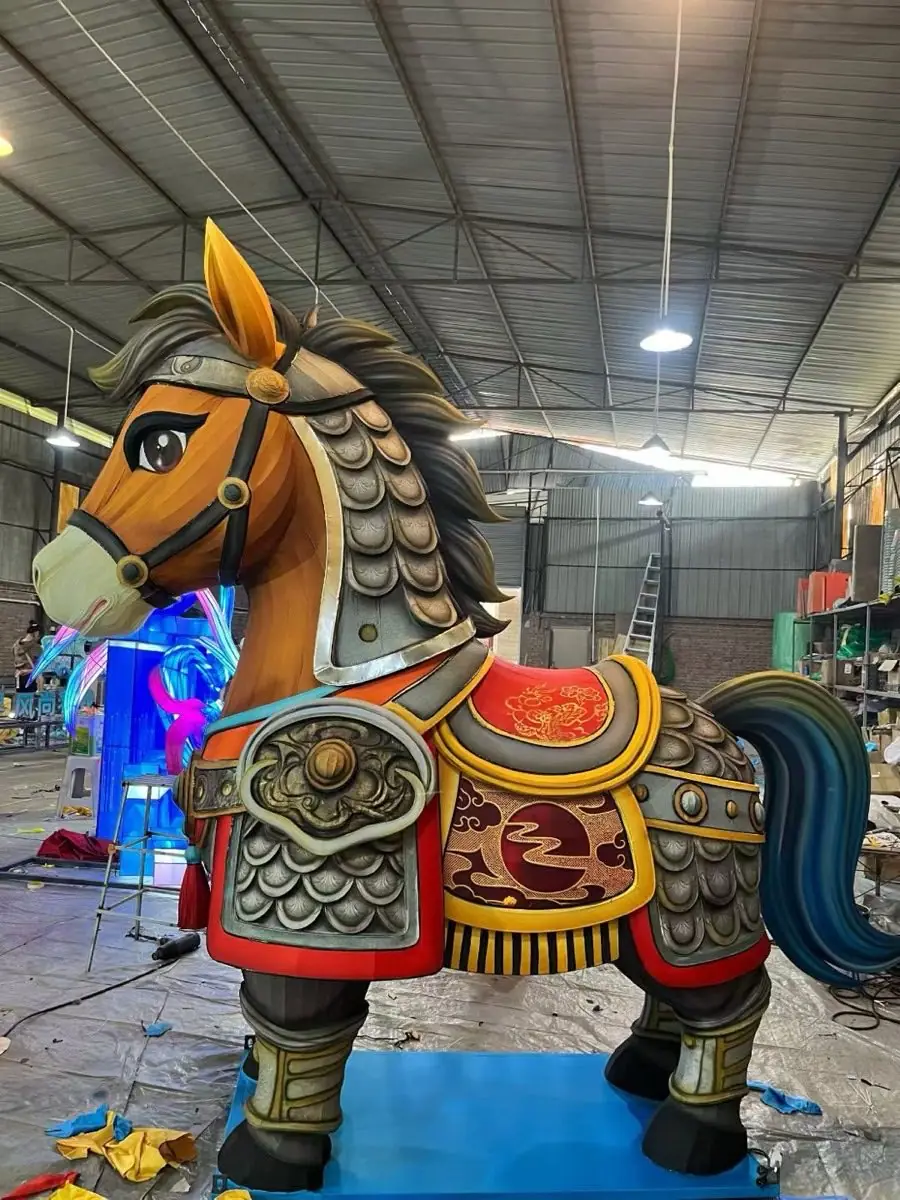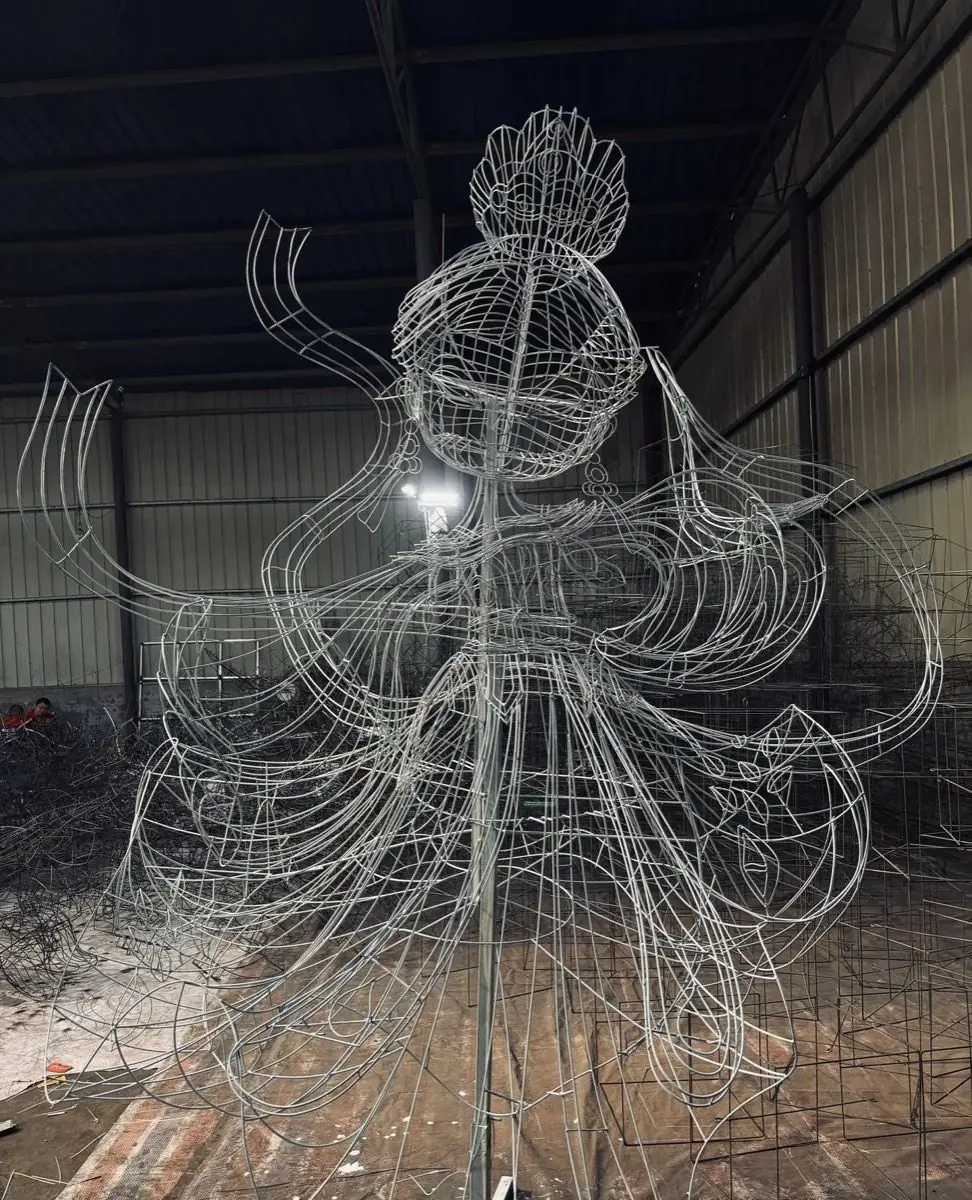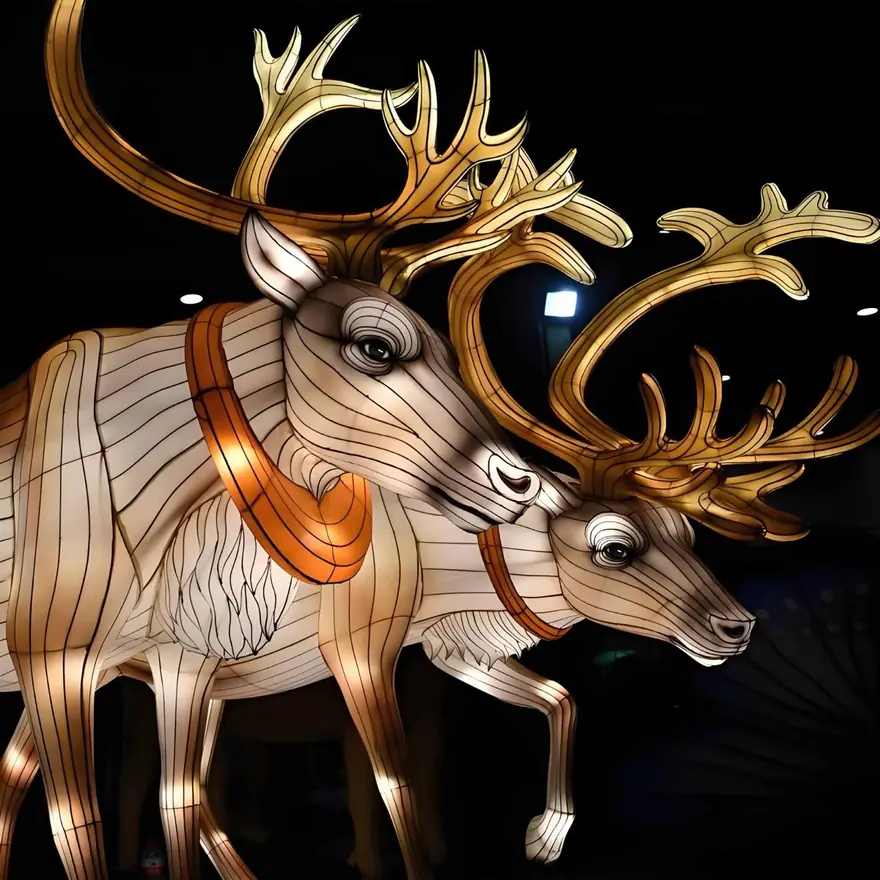
A lantern display is three different products wearing one costume: a welded steel skeleton, a painted silk skin, and an electrical system inside. Each layer ages on its own clock, which is why the honest answer to "how long will it last?" is never a single number. The useful answer is a breakdown, because a venue that knows which layer wears first can budget for maintenance instead of replacement.
The Lifespan of Each Layer
The steel frame is the long-lived layer: properly galvanised and coated, it carries a figure through eight to ten outdoor seasons with no attention beyond rust-spot touch-ups. The silk skin is the first to show age. Outdoor UV, rain and temperature swings fade paint and stress the fabric after roughly three to five seasons, depending on climate, a desert venue ages skin faster than a temperate one. LEDs are rated for tens of thousands of hours, so even a full winter season of nightly use barely dents them; controllers and connection points fail before diodes do. Paint is the detail layer that keeps a figure believable, and it is also the cheapest to renew.
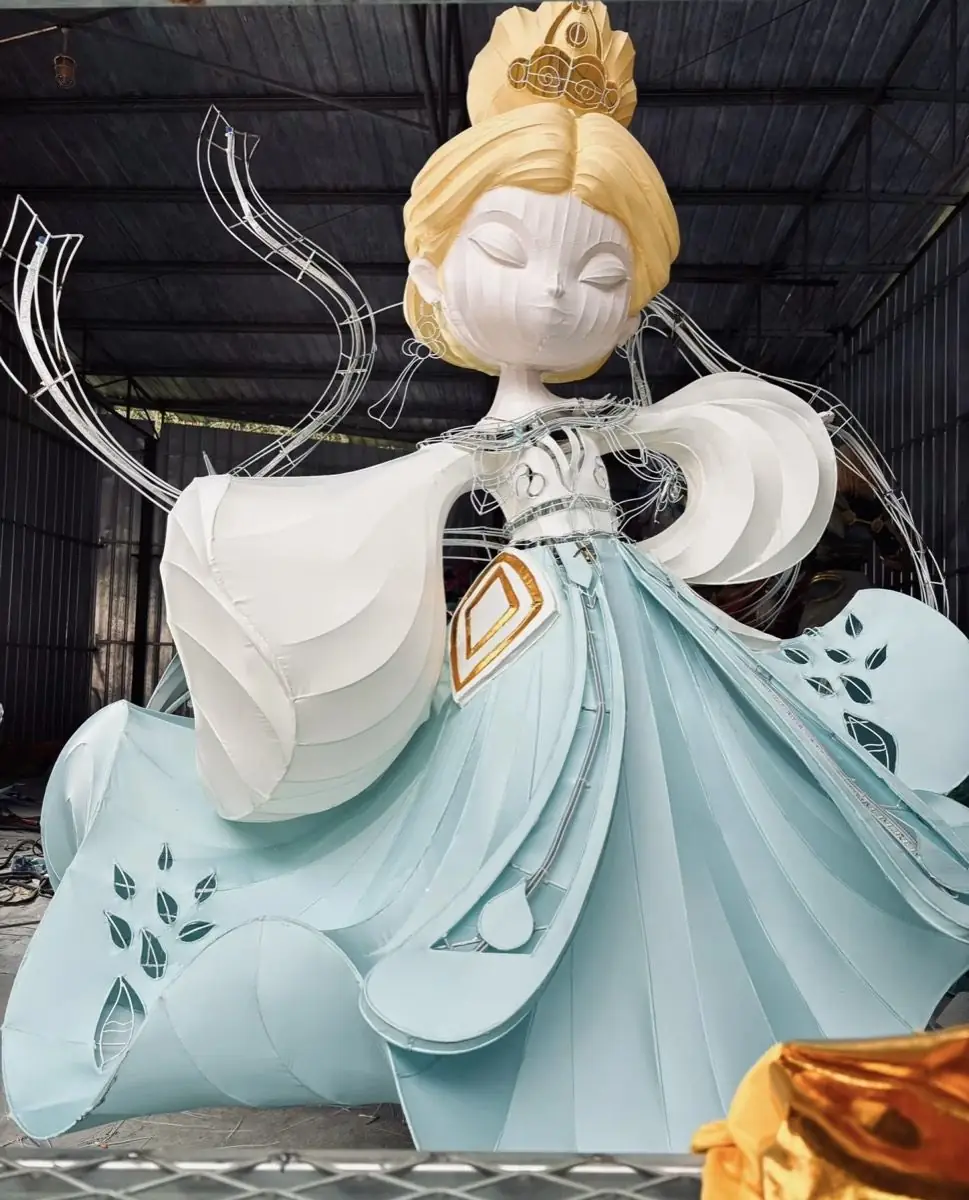
What Wears a Display Down
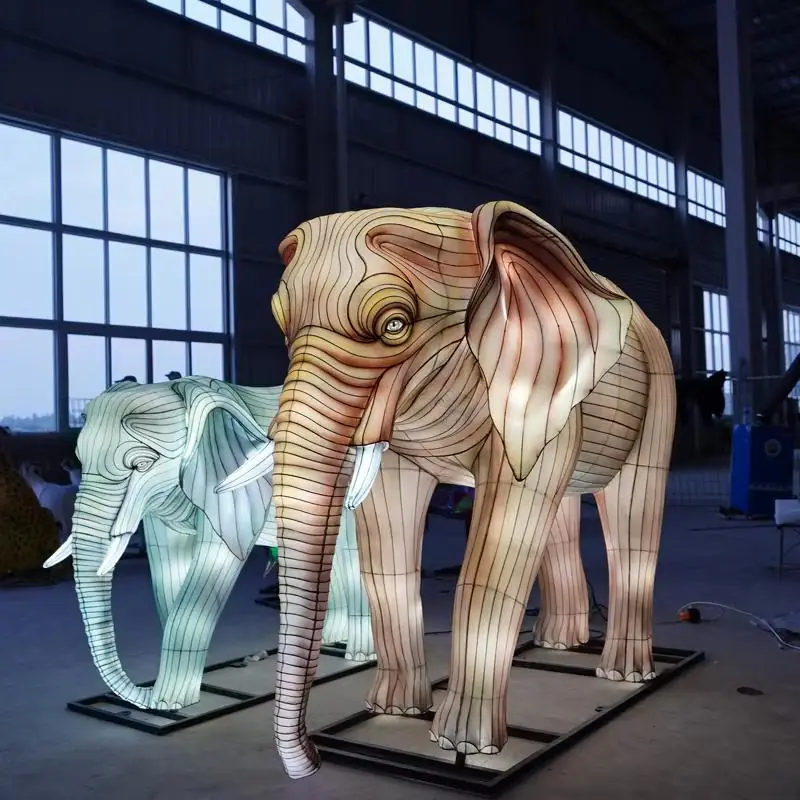
Four forces do most of the damage, in rough order. UV exposure bleaches paint and embrittles fabric at the sun-facing side first, which is why our daylight shots, like the elephant skin above, matter as much as night photos when judging a build. Moisture attacks from the inside when drainage is poor. Wind vibration loosens fasteners and stresses joints season after season. And handling, de-installation, transport, re-installation, causes more skin tears than weather does, usually in the same corners each year because crews re-fold fabric the wrong way.
Off-Season Storage Done Right
Storage decides whether year four looks like year one. Figures should be de-installed by the crew that knows them, photographed before packing, and crated with fabric relaxed rather than creased. A dry, ventilated space between 5 and 30 °C keeps silk and paint stable; rodents find silk delicious, so sealed crates are worth the cost. Venues that fold lanterns into whatever container space remains after the season's other equipment typically spend the savings on repairs. Our build-stage walkthrough covers how export packing is designed for exactly this cycle.
Refurbish or Replace
When skin fades but the frame is sound, refurbishing is the rational choice: re-skinning and repainting a figure runs at roughly a third to half the price of a new build and ships in weeks instead of months. Replacement makes sense when the frame itself has corroded, when the figure needs a mechanical upgrade to stay competitive, or when re-theming the trail anyway.
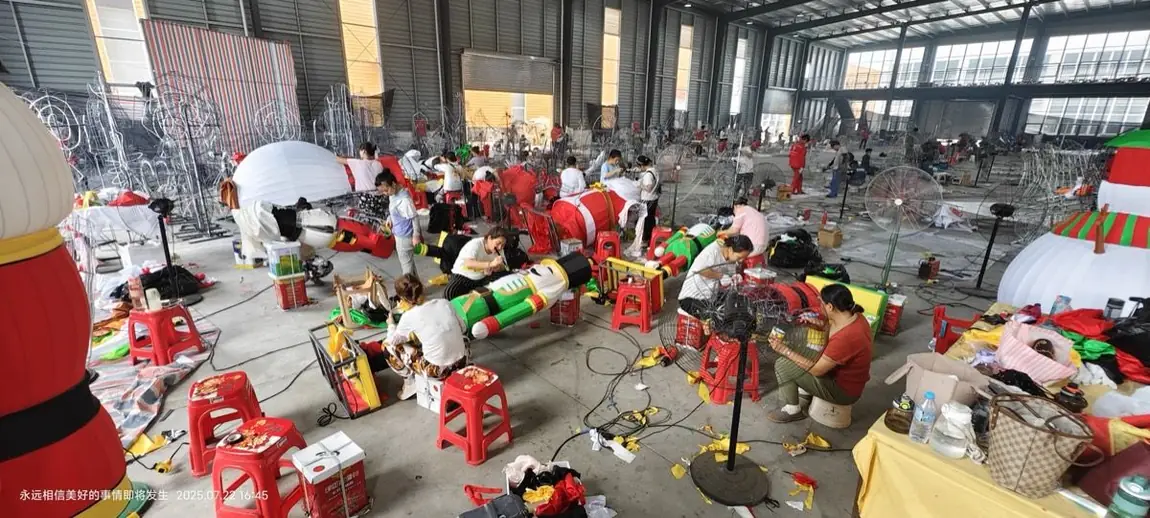
If you are budgeting a multi-season programme, the place to start is our refurbishment and maintenance service, which can quote renewal on figures you already own or walk a new custom lanterns brief through the build stages from frame to opening night. Alongside that, our FAQ covers maintenance questions in detail and our LED systems guide explains the electrical layer.