Sitting the village at a corner
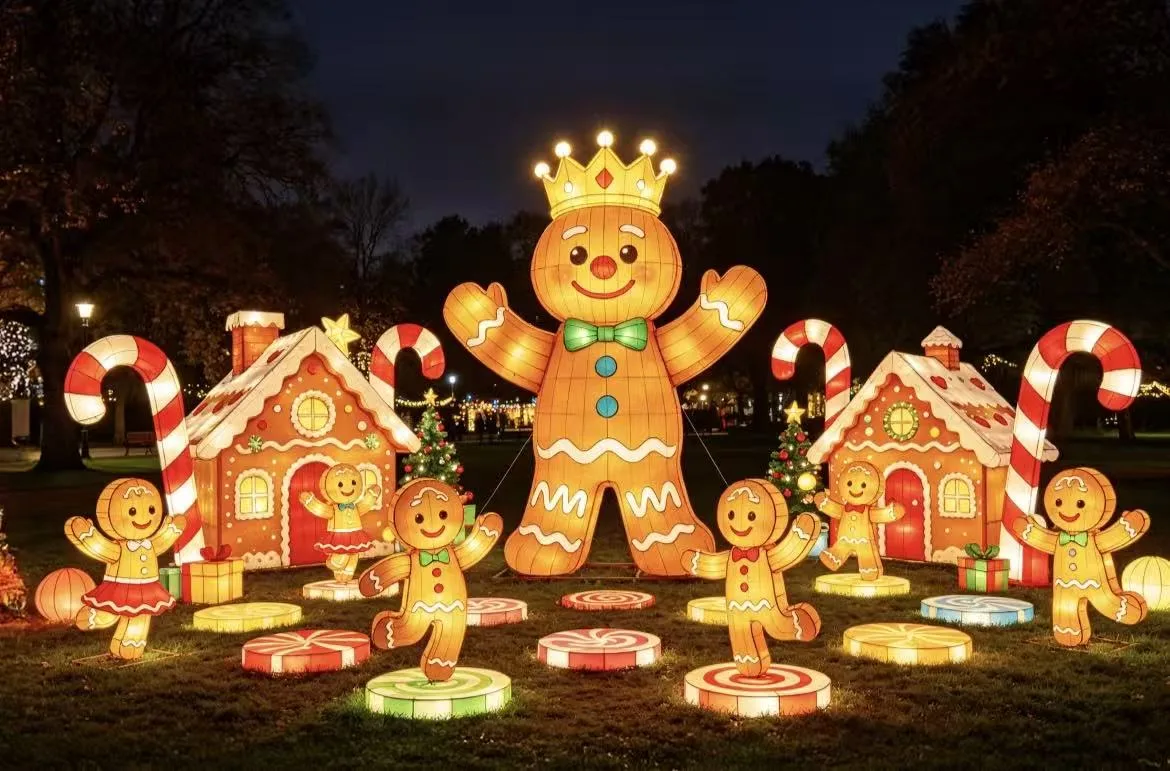
A village works best where a path turns or narrows, because that is where people slow down. Rather than filling a plaza centre, this set is built to occupy a corner or an entrance, with the houses angled so their lit windows face the approach. The figures and trees are positioned to leave a clear walking line past the scene, so the piece draws a crowd without blocking the route that runs beside it. The result is a destination the visitor chooses to enter rather than an obstacle they walk around.
Houses that read from a distance
Each house is a simple silhouette with a glowing window grid, and the effect depends on spacing rather than fine detail. From across a square the group reads as a small lit town; up close the windows show their individual warm cells. The conifers between the houses break the skyline so the scene does not look like a single flat backdrop, and the trees can be moved between positions to fit a different plaza shape the following season without rebuilding the houses.
A low, even wash of light
The village runs on a soft, even pool of light rather than bright spots, which is what lets it sit beside shoppers and strollers without glare. Each house is its own zone, so one can be dimmed for maintenance while the rest stay lit, and the whole scene can be tuned warmer or cooler to match the surrounding retail lighting. The LED load stays in the 50 to 300W band by scale, so a standard outdoor circuit is enough to run the full group through the night.
Packing the town away
Because the frames are linked in segments, the village breaks down into flat crates that travel as one consignment and store in a standard bay. The silk covers are removed and rolled, and the steel is kept dry to protect the anti-rust treatment. That is what makes a multi-house scene practical for a venue that books it for one holiday window and then needs the floor space back for the spring programme.