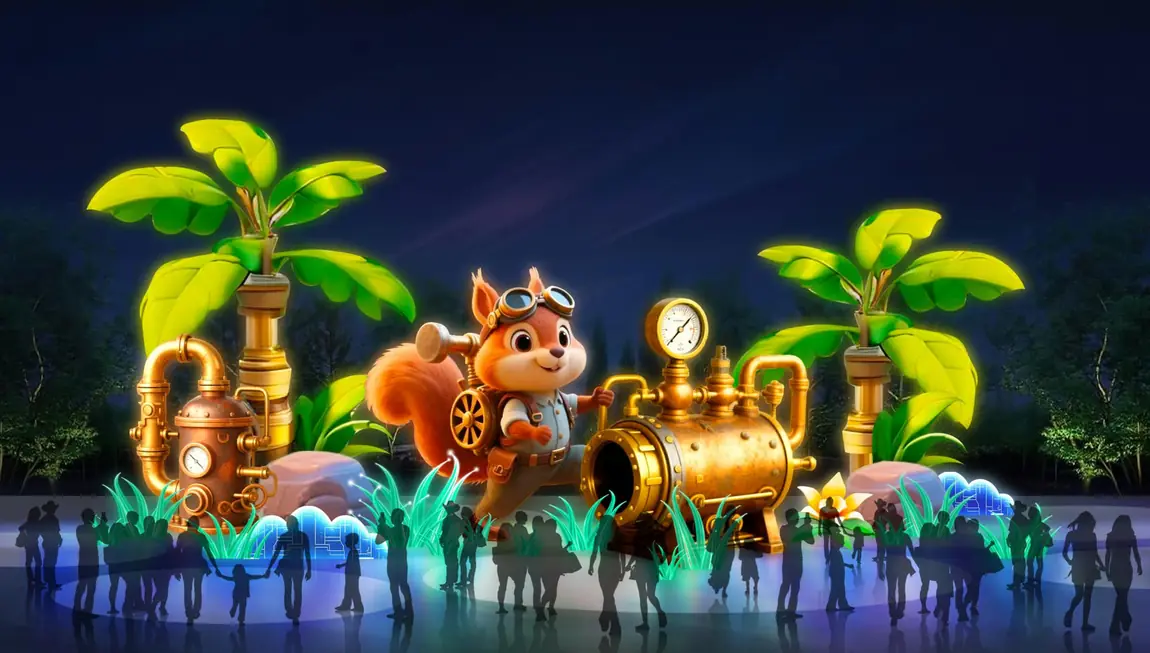
Custom Theme Park Lanterns & Nighttime Attractions
Build a new world after dark. Turn the routes, plazas and themed lands you already operate into an immersive nighttime experience with custom lanterns, illuminated characters and large-scale themed installations. We design, engineer and deliver theme park nighttime attractions end to end, from the first route sketch to opening night.
Give the park a second life after dark
Most parks follow a daytime curve: the rides absorb the crowd, the peak passes, and the last hours are often the quietest on site. A physical lantern experience gives the day somewhere else to go, on ground you already operate, without competing with the rides.
- —Evening programming alongside normal daytime opening
- —A different atmosphere in areas guests already know well
- —A themed walking route for guests who want to stay off the rides
- —Photo landmarks that give an evening route a visible shape
A theme park light show is planned as a commercial proposition from the start: when the evening begins, where guests enter it and where they finish. See how a full project is delivered.
Designed around the park you already operate
A theme park is never an empty site. The grounds already hold themed lands, ride structures, service roads, retail frontage and landscaping, under an operating plan that will not change to suit an installation.
The layout is developed around existing attractions, visitor routes and operating requirements. We start from your park plan and photographs rather than a blank drawing. Constraints include:
The result is a route that runs with the park rather than through it: a piece that would narrow a fire lane is repositioned, and a blocked sightline is rescaled.
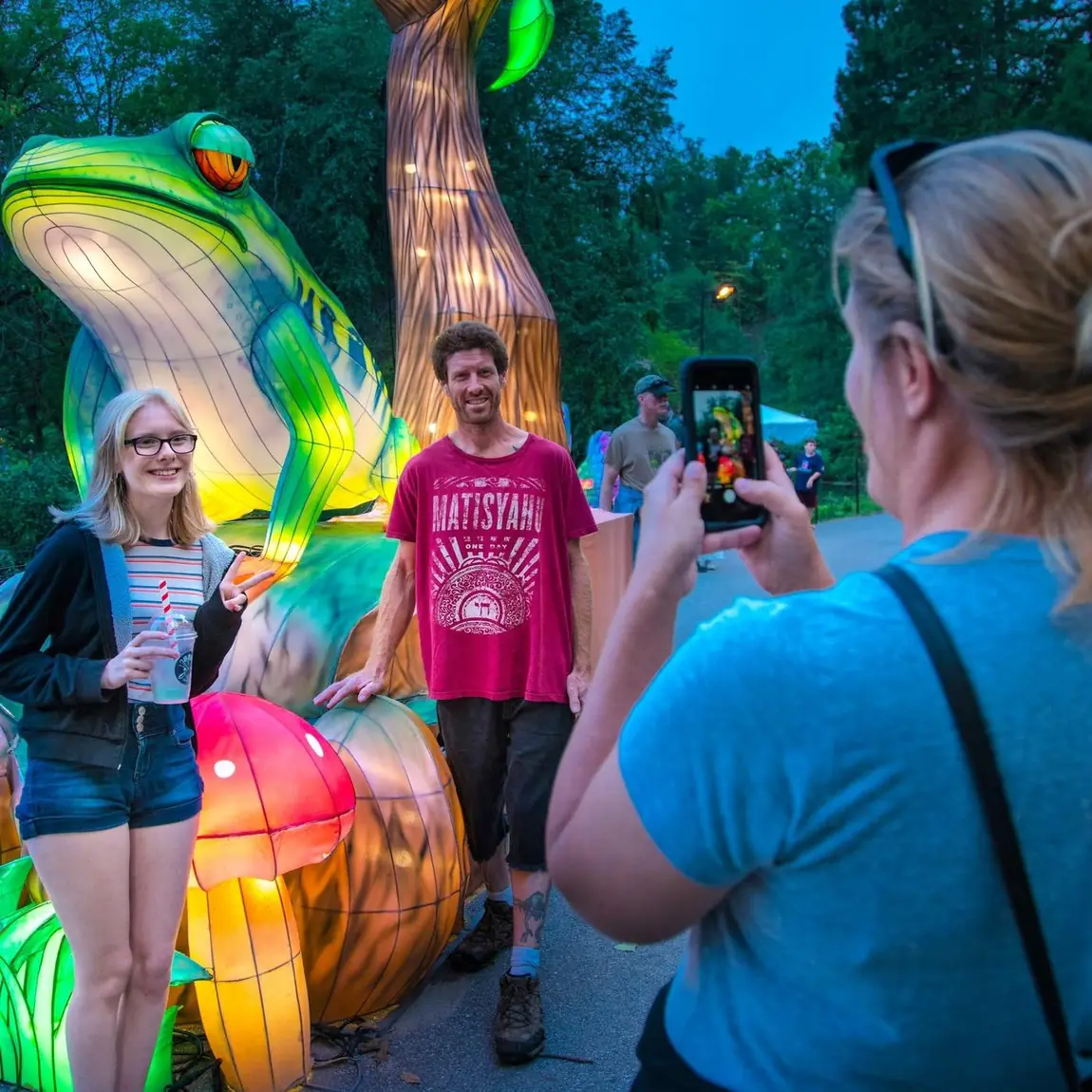
From individual displays to complete themed worlds
A single large lantern is a feature. A themed world is somewhere guests walk into and describe as a place rather than an object. The difference is commitment: one visual language across several themed lantern displays and a route through the scene. Directions we have worked on include:
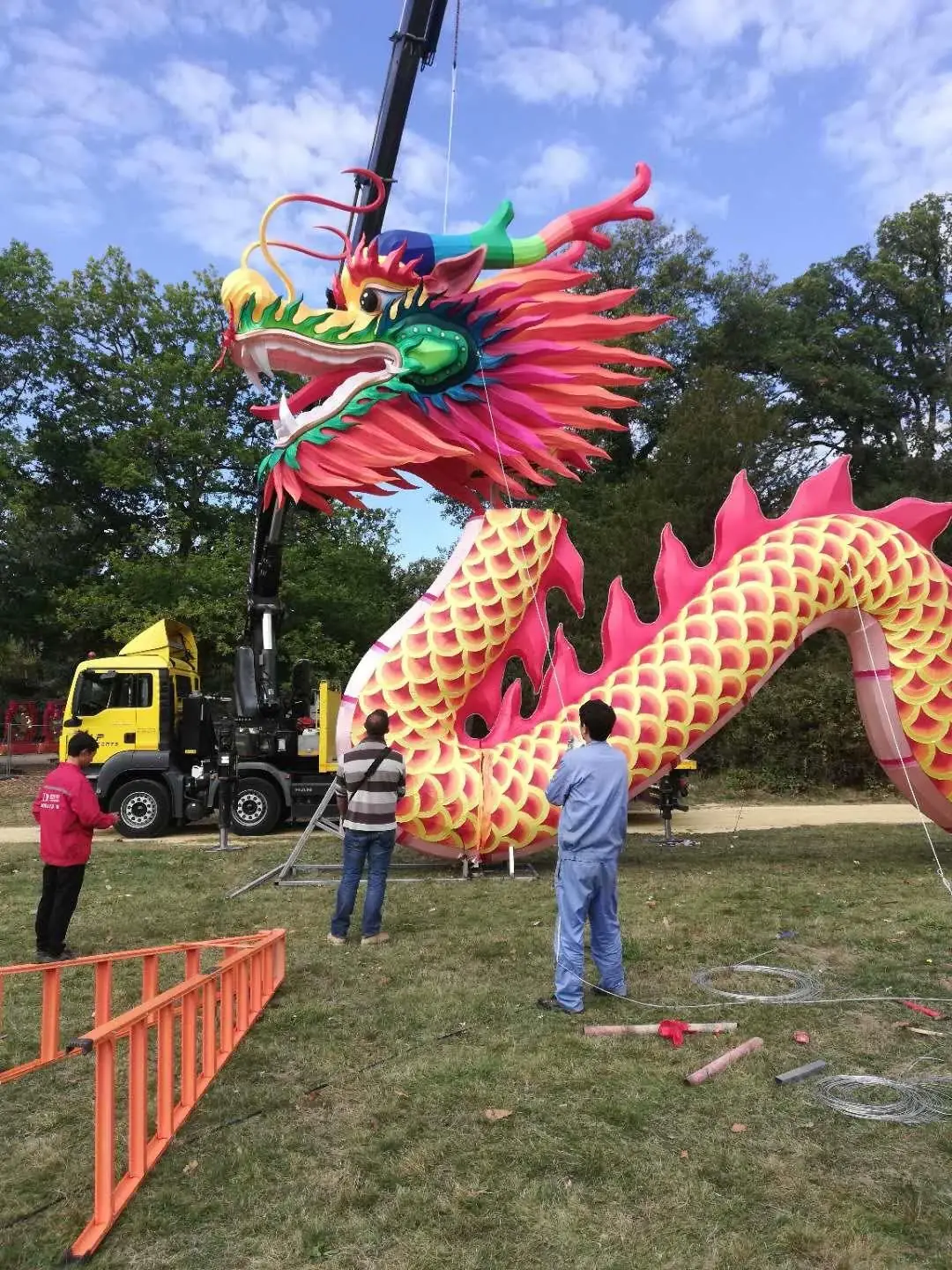
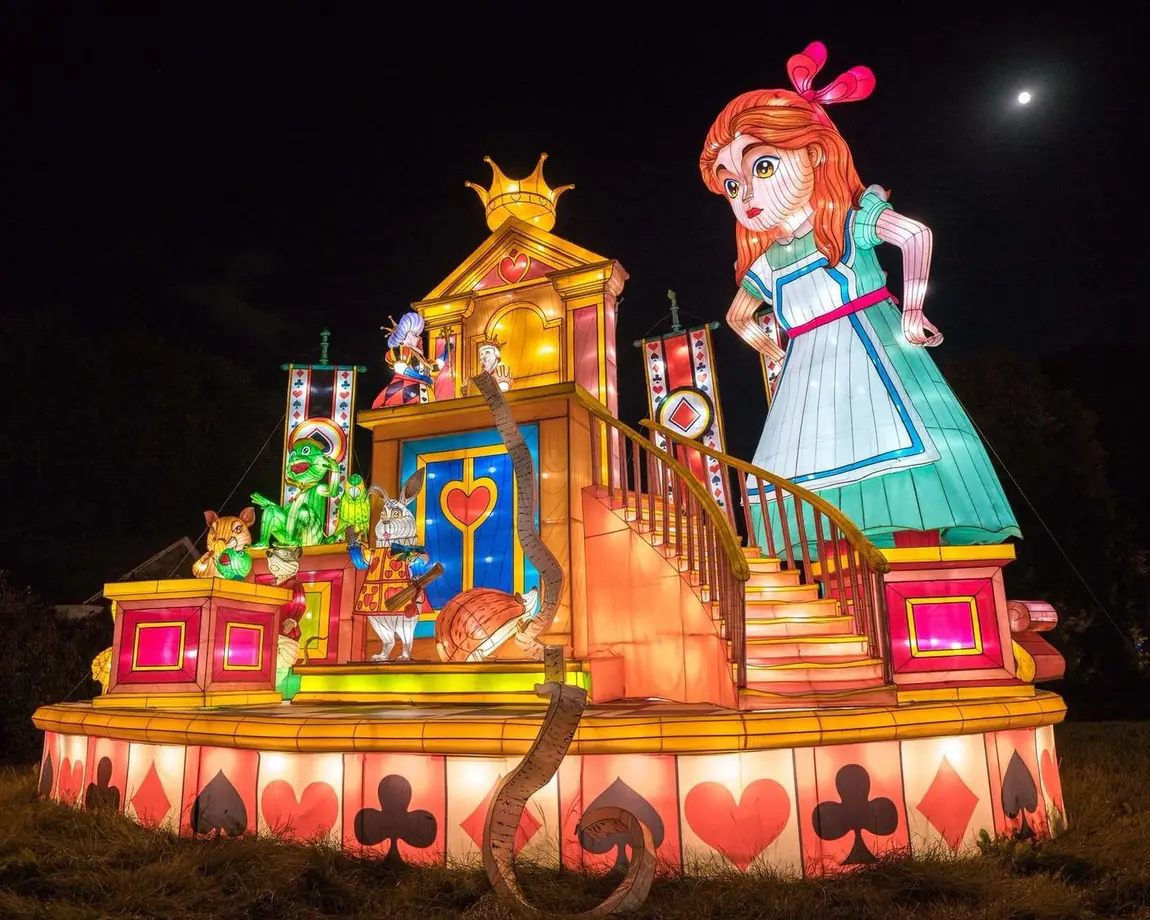
Where a park wants a character it already owns, we build the figure from client-supplied or properly licensed references, and ownership and design approval stay with the park. Several directions have their own collections behind them, including storybook worlds, animal lanterns and Chinese dragon lanterns, and any can be reworked for a park.
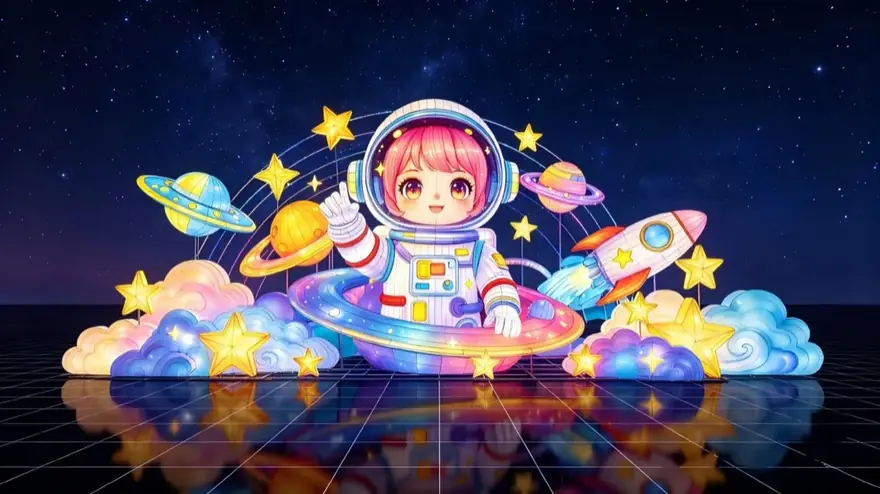
Create the moments guests remember
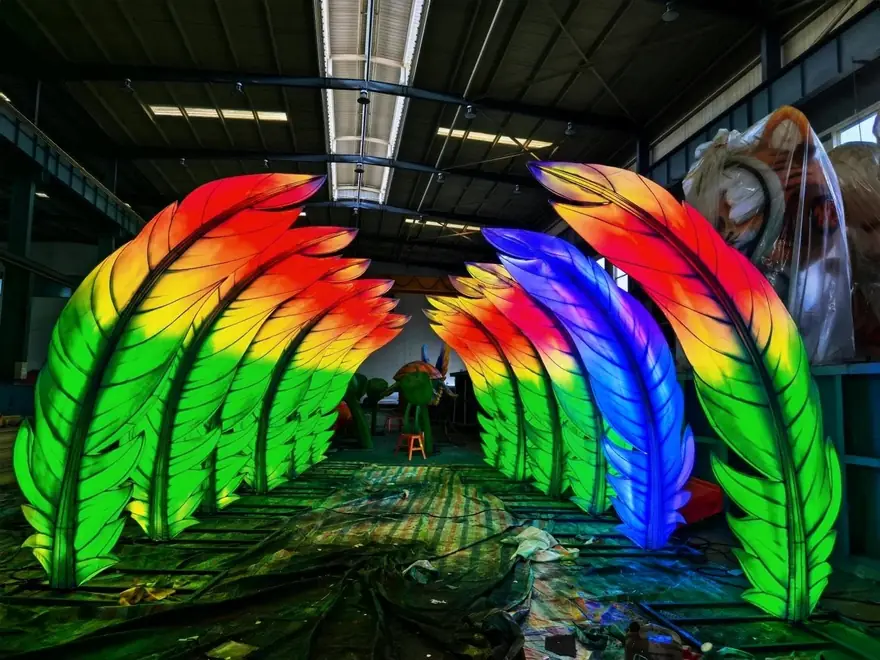
Guest memory is built from a few moments, and on a night route those are arrivals and landmarks rather than the total number of pieces. Scale creates that hierarchy: a person-sized figure reads as detail, one several times that height reads as an event.
An event also needs open ground in front of it, a viewing distance that lets guests take it in, and something to do on arrival, whether a frame, a step or a path passing underneath. Installations that carry an evening:
Not every moment worth remembering is big: a quiet scene between two loud ones gives the loud ones their weight, and a stretch of near-darkness does more for the next landmark than another bright object.
Build a seasonal overlay without rebuilding the park
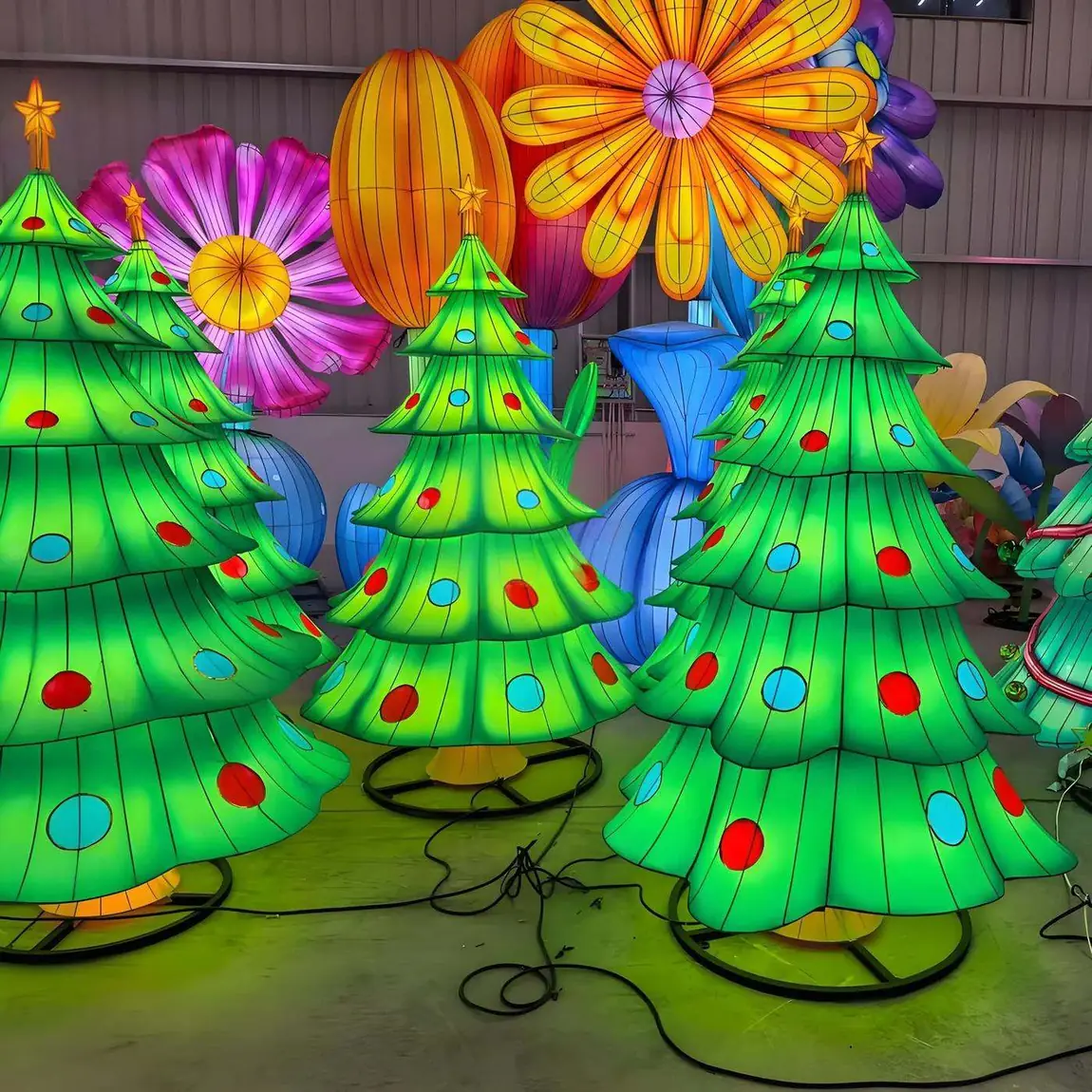
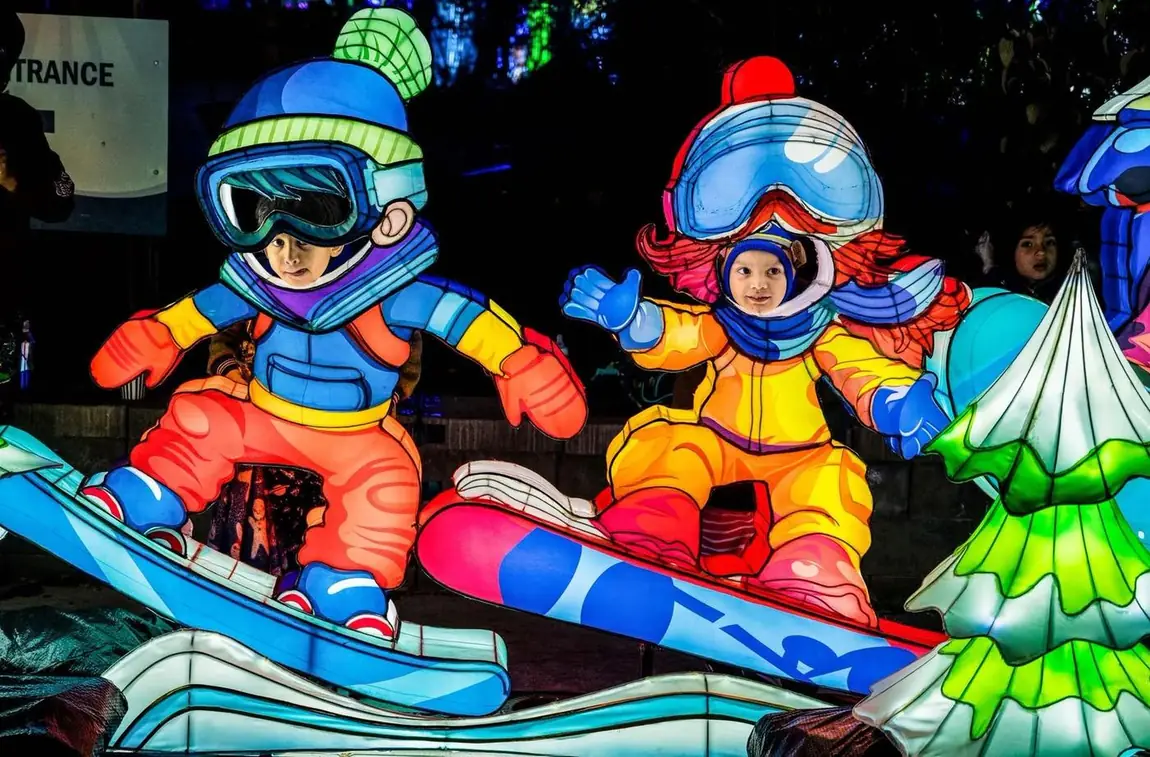
Seasonal events are the clearest commercial case for a theme park lantern festival: the park already exists, the audience already understands a limited-time ticket, and the campaign calendar is in place. Physical installations can be planned around infrastructure already on site, so service corridors, storage, ticketing and staffing do not have to change. Only what stands on the route changes.
Overlays we can develop include:
A seasonal build is therefore drawn as a layer: pieces are positioned so they can be lifted without leaving a gap in the park's own scenery, and struck once the season ends. This is not a claim that any display fits anywhere without site work: ground conditions, drainage, power and access are checked during planning rather than assumed.
Parks with an established holiday programme can apply the same approach to our Christmas and seasonal displays.
Add motion where the story needs it
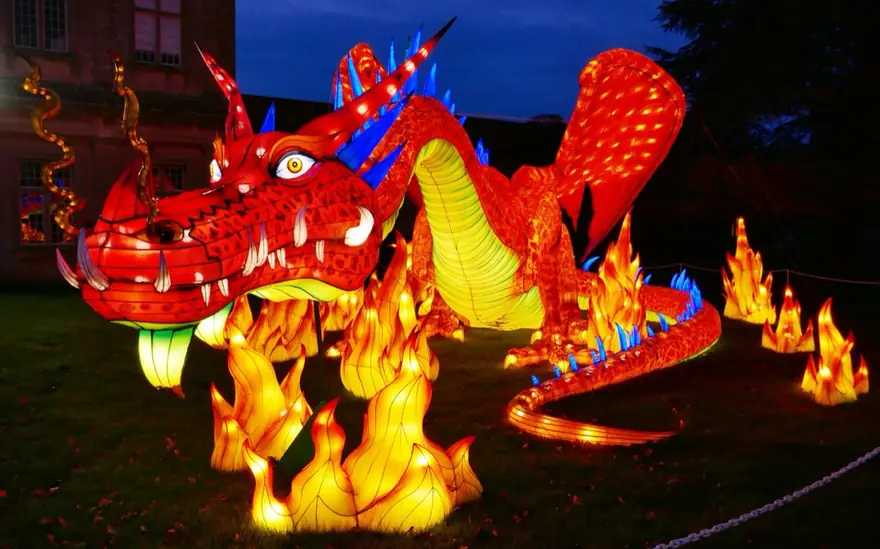
Motion is an option rather than a default. A figure that moves for a reason does more for a scene than a route where everything moves at once. Where a story calls for it, a scene is built as an animatronic piece with the lantern work and the mechanics developed together. Movement types, which combine in one figure:
Scenes that tend to earn it are dinosaurs, dragons, animals in a jungle or safari setting, and characters that turn toward guests as they pass. Lanterns stay the core of the work: a park night trail is mostly still sculpture held together by light, pacing and placement. Animatronic lanterns covers the mechanics in more detail.
Design the experience as a journey
Placement follows the guest experience rather than filling empty space. The useful question is not where a piece will fit but what a guest should feel at that point in the walk. The sequence below is a working example of staging an immersive lantern experience, not a formula.
Viewing distance sets the scale a piece needs to read at all. Transitions decide whether guests feel they have moved into a different world. Guest circulation sets how much room a figure needs where people will stop, and photo stops are placed deliberately. Queue interaction matters where a route passes a ride entrance, because the two crowds move at very different speeds.
Nighttime sightlines need their own pass, since a structure nearly invisible in daylight can dominate the skyline after dark. Ticketing, staffing, capacity and the operating plan stay with your team; our part is an installation that fits it.
Built for public-facing outdoor attractions
For a theme park night attraction, appearance is only part of the brief. An installation also has to hold up through a full season outdoors, where guests pass it at close range, every night, in whatever the weather does. Structural design, electrical systems, outdoor conditions and maintenance access are considered during project development, not resolved on site. Engineering considerations can include:
The materials and systems used across our projects are set out on the engineering side of this site: galvanised steel frameworks, LED lighting, flame-retardant covers and modular construction. Specifications are developed for each installation and destination rather than issued as one fixed sheet, because a coastal park and an inland park do not face the same conditions. Depending on the project, our technicians assemble, wire and test on site, or we train your crew with marked drawings.
From park brief to opening night
Nine stages, one team. Concept, engineering and manufacturing stay in our own workshop.
Venue Brief
Park plan, existing attractions, event season, target zones and constraints.
Creative Concept
Theme, visual language, key installations and the route concept.
Scene Planning
Placement, scale, transitions between zones and hero landmarks.
Engineering
Approved designs translated into manufacturable structures for the agreed site.
Manufacturing
Frame fabrication, lighting, surface work and finishing in Zigong, China.
Factory Review
Assembly and project-specific quality checks before packing.
Global Delivery
Modular packing and transport coordinated to the agreed scope.
Installation
On-site assembly and positioning according to the agreed responsibilities.
Opening
Final handover according to scope, ready for the first evening.
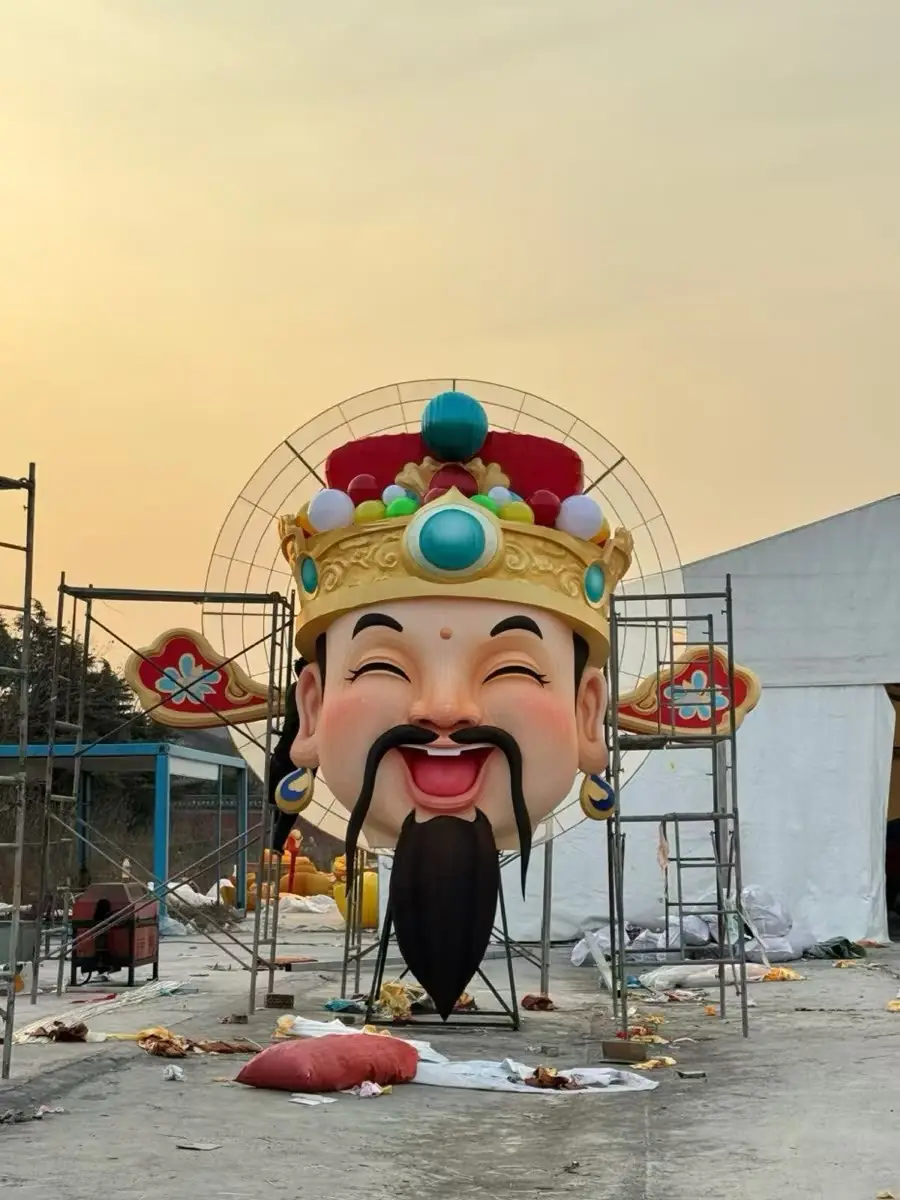
Every piece is built and finished in our own workshop.
Themed attraction and night experience projects
Two settings closest to the scale a park brief asks for, each with the venue type it actually was.
Dinosaur Night Safari
A zoo wanted a summer headline act that complemented its existing exhibits rather than competing with them along a path network it already had. We installed life-size animatronic dinosaur lanterns with motion and sound along that route, and weekend slots sold out for eight consecutive weeks.
Fire Festival Spectacle
A festival needed a closing act that would hold a crowd at the end of the night rather than let it drift away. The finale was an animatronic fire-breathing dragon, a single hero piece built to carry the last moment of the programme.
Why these two matter here
Both were built inside sites already open to the public, and both had to fit the venue's own programme rather than replace it.
Full write-ups are on our projects page, including the Fire Festival Spectacle build.
Plan for the next season too
Where the commercial case works, what happens in the second season is worth answering at brief stage rather than at the end of the first event, when the pieces are already packed. Depending on the design and scope, modular displays may be stored, reinstalled, reconfigured, repainted or refreshed. That is decided while the pieces are being designed.
What we can say honestly is narrower than a sales page usually claims. Not every piece is reusable, not every material holds up indefinitely, and a structure designed for one position is not automatically right for another. Storage, how it was treated in service and the length of the season all change the answer, so we set the expectation at brief stage. See the full service chain.
If you are still deciding what the event should be, the operating side is worked through separately: route design, throughput, season window, ticketing, staffing and the numbers worth tracking are all set out in our guide to planning a theme park lantern festival.
Theme park lantern FAQs
Yes. A full programme can be developed as a themed route with an arrival, a sequence of zones and a finale, or scoped down to a few installations in specific areas. The right scope depends on the park and the season, so it is agreed after the venue brief.
Yes. Themed lands, architecture, colour palettes and the park's own visual language are treated as design inputs, so a new installation reads as part of the area it stands in. Existing designs can also be adapted rather than built from scratch.
Yes, where the character is owned by the park or the reference material is properly licensed and supplied to us. We build the physical figure to the reference you provide. Ownership, permissions and design approval remain with the park.
Yes. The layout can be developed around existing attractions, visitor routes and operating requirements. Clear widths, service routes and emergency access are identified during planning, so installations are positioned around them.
Yes. Some scenes work better with movement, and those are engineered as animatronic pieces with the lantern work and the mechanics developed together. Motion is used selectively: a mainly still trail with a few moving moments usually reads better than continuous movement.
Yes. Our installations are built for outdoor use, and structural design, electrical systems, outdoor conditions and maintenance access are considered during project development. Specifications are developed for each installation and destination rather than issued as one fixed sheet.
Yes. Spark Lantern supports international projects and can coordinate manufacturing, packing, export documentation and overseas delivery according to the agreed scope. Installation can be handled by our own technicians, or supported remotely with marked drawings and guidance for your crew.
There is no fixed price list, because scope changes so much from one park to the next. The number of displays, their scale, design complexity, whether motion is involved, engineering for your site, shipping and installation scope are all reviewed before a quotation is prepared.
Yes. As a theme park lantern manufacturer we work to the park's specification rather than from a fixed catalogue. Technical specifications such as structural requirements, weather resistance, electrical configuration and lighting controls can be reviewed against the park's site conditions and operating requirements, and where the park already has a house style, a ride safety envelope or a maintenance regime those can be taken into account during design.
Build your park's next nighttime world
Share your park plan, event season, target areas and creative direction. Spark Lantern can help turn them into a custom physical nighttime experience designed around your venue.
Design · Manufacturing · Engineering · Global Delivery · Installation