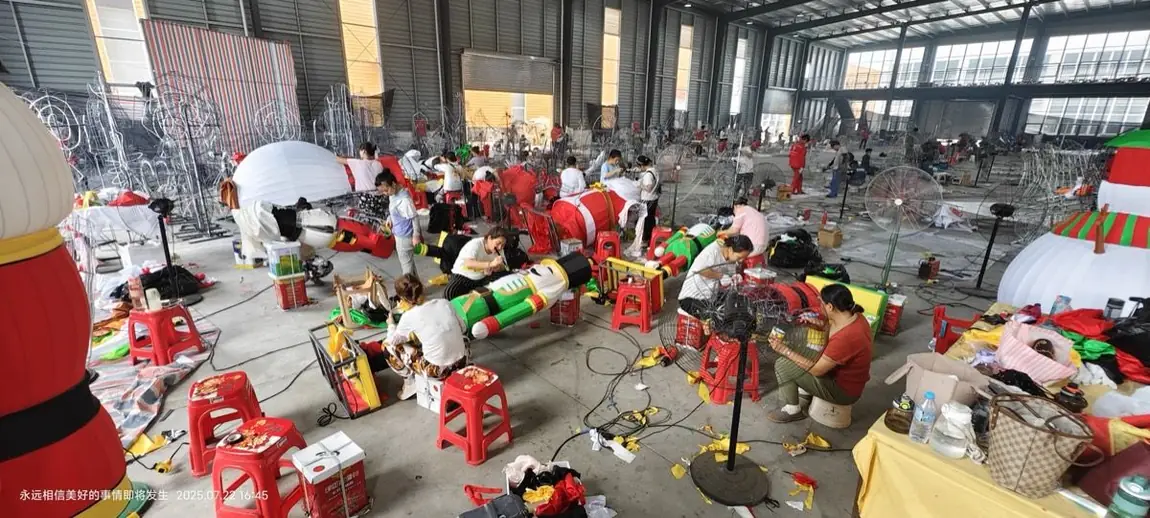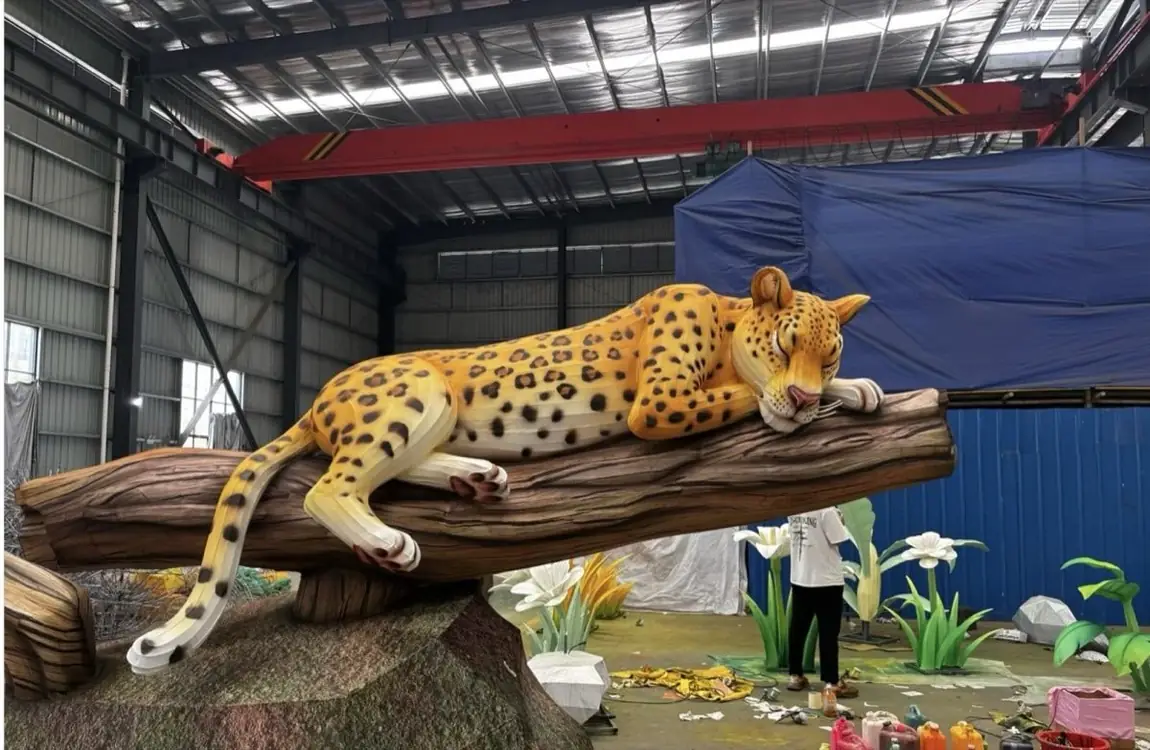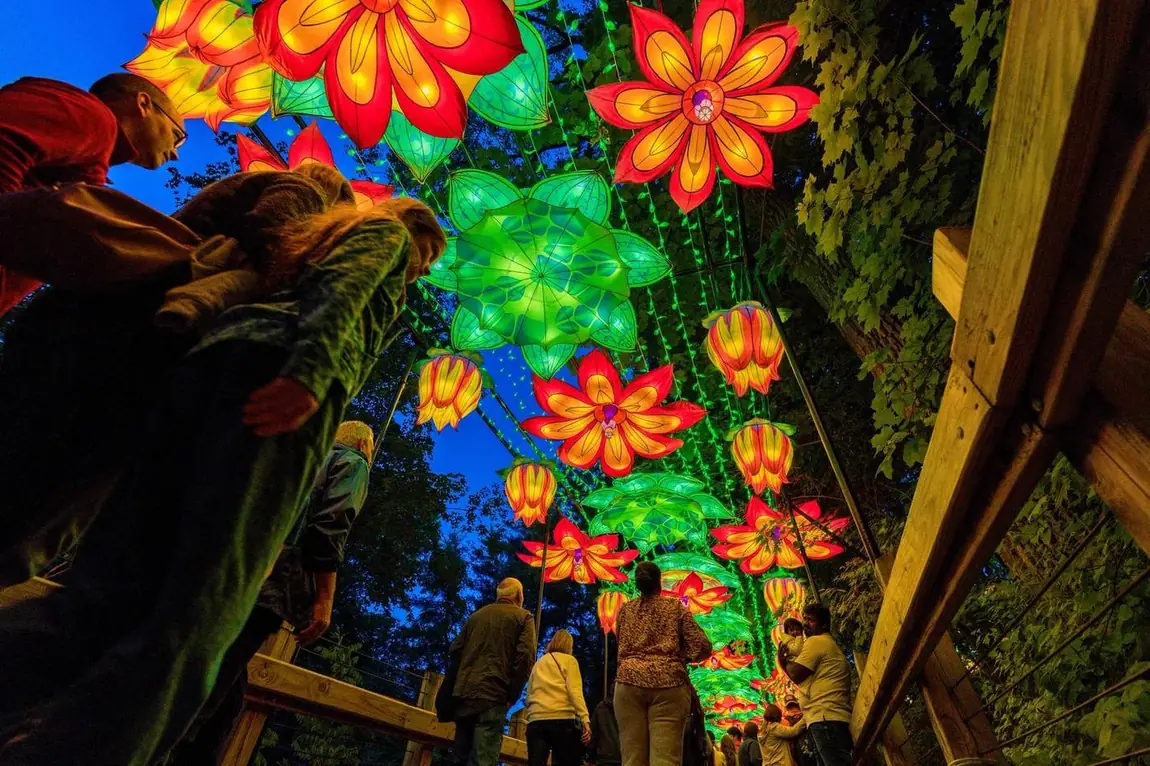
A light show inside a living collection is two projects at once: an event, and a construction project on ground that must be healthier in April than it was in September. The construction side is where gardens get into trouble, because the damage that matters most is the one nobody sees on opening night.
A botanical garden light show is a partnership between an events team and a horticultural team, and the horticultural team is not a stakeholder to be notified late: they hold the site knowledge that decides where a piece can stand.
Why a light show and a living collection are not natural neighbours
Almost everything a light show needs is something a garden evolved to avoid. It needs firm level ground; a garden has soft beds, shallow rooting and drainage that must keep working. It needs to move equipment to the point of use; a garden has paths sized for visitors, not machinery. It needs to attach things and hold them steady; a garden is full of living tissue that scars. And it needs light after dark, the signal a temperate plant uses to decide when to stop growing.
None of that makes the two incompatible: gardens run these events every winter and design around the conflicts in advance. The failure mode is a show built the way a show is built in a car park, with the bill arriving two or three seasons later as a tree in decline.
So the project has two clocks: the event clock runs to opening night, the horticultural clock runs in years. The operating questions belong in our guide to planning a theme park lantern festival. This one stays on the ground, where root damage, soil compaction, trenching and grade change, the four classic causes of post-construction tree decline, are the same risks a light show creates.
Reading the root zone before anything arrives on site
The concept that drives everything is the critical root zone, or CRZ: the area around a trunk holding the roots a tree depends on for water, nutrients and structural stability. Definitions differ. The International Society of Arboriculture describes the CRZ as a radius of roughly one foot per inch of trunk diameter at breast height, while other authorities work to one and a half feet per inch for especially valuable trees, or use a multiple of the canopy dripline. The figures do not agree, so the survey has to establish which one the site is working to and on whose authority.
Two facts shape it: most tree roots sit in the top 12 to 18 inches of soil, which is why a shallow scrape can do more harm than a deep one, and roots do not stop at the canopy edge, so a survey mapping only trunks and canopies will understate the area needing protection.
Arborist tree protection means a certified arborist defines the protection area, not the events team. That is the consistent advice across extension services, park authorities and municipal codes, and NPS guidance on protecting trees during construction is explicit that the site should be surveyed, the trees needing protection identified, and a plan made to avoid compaction and protect roots, trunk and limbs.
The tree protection plan has to be workable without interpretation: which trees are retained, the protection area drawn around each, tree protection fencing where machinery will pass, a root protection barrier on access routes, and agreed staging areas. Two findings should change the design rather than be managed around: where a piece would sit inside a protection area, moving it is cheaper than engineering the ground to accept it; and where a route requires heavy equipment across a planted area, the route is wrong, not the matting.
Soil compaction: the damage you cannot see
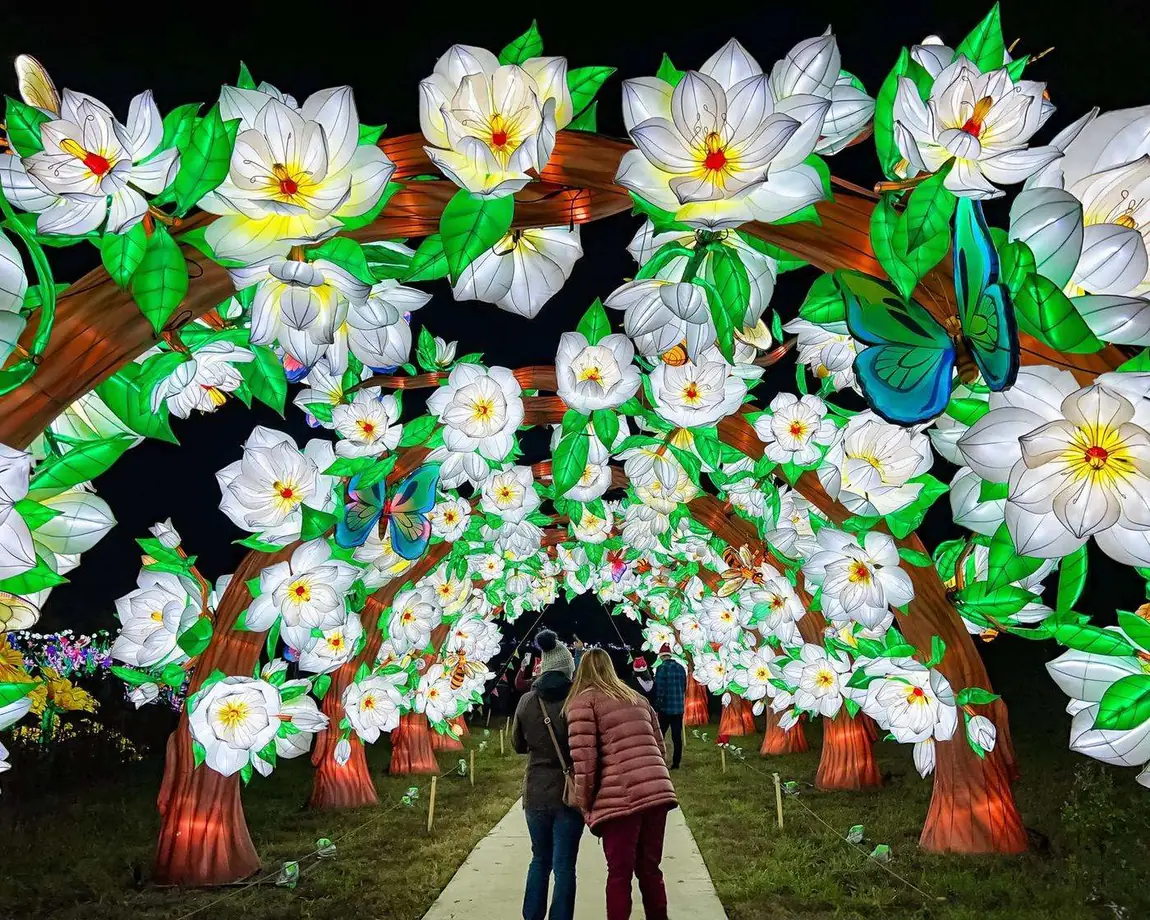
Soil compaction is the most under-rated risk in outdoor events because nothing about it looks like damage. The ground still looks like ground, the grass grows back, and there is no broken branch to point at. What has happened is below the surface: the air space in the soil has been squeezed out, and that air space is what roots and soil organisms live in, so soil compaction and tree roots are in direct conflict. NPS guidance sets out the mechanism plainly: a major component of soil is the air space within it, and eliminating that air through compaction leaves a poor growing environment for roots.
What makes it treacherous is how little it takes. University of Florida IFAS extension material notes that more than 90 percent of relative compaction occurs within the first three tire passes, so a truck that strays into a protection zone and reverses out has already done most of its damage.
Winter makes it worse. Wet soil compacts far more readily than dry, and NPS advice is to minimise traffic near protected trees after rain. Oregon State University Extension notes that even temporary fills, such as stockpiling mulch or soil inside a critical root zone for as little as several days, can have severe and long-term effects.
The countermeasures are not exotic. NPS guidance suggests interlocking heavy equipment mats, three-quarter-inch plywood, six inches of organic mulch, or similar materials that absorb and distribute weight where work must happen near a tree. Root zone protection of this kind is standard practice, and a ground protection mat, or compaction mat, belongs in the budget from the start rather than appearing as a hire charge mid-build.
Two habits protect the site more than any product: keep equipment and material storage out of protection areas, and treat wet ground as a stop condition for heavy access.
Fixing methods that do not wound the site
The best fixing does not touch living tissue or the soil around it. Brooklyn Botanic Garden's account of its winter event is a useful worked example. For an installation creating the illusion of strings running between cherry trees, the team did not attach them to the trunks, because that could harm the bark. They installed posts above ground between the trees instead, secured with sandbags filled with horticultural-grade sand, chosen so a spill would not alter soil pH, and placed at the edge of the trees' root zones, where fewer roots would be affected.
Structure carries the load, ballast is chosen for what it does to soil, position is chosen by where the roots are not, and nothing is fixed to the tree.
Where a piece must sit on planted ground, agree the fixing approach before fabrication, working down a short list in order of preference: hard standing and existing paths first, then ground screws or anchors outside protection areas, then ballasted bases on protection matting, and only then excavation inside a root zone.
Trenching deserves its own warning. Cable routes are the most common reason an installation needs to cut ground, and trenching through a critical root zone can severely destabilise a tree as well as affecting its health through root loss. Oregon State University's guidance is unambiguous: avoid trenching through the CRZ entirely and tunnel beneath the root zone where utilities must cross it, and NPS advice is consistent, recommending soil-boring equipment rather than a backhoe. Cable routing therefore belongs in the design phase, because realigning a route is a design decision, not a site fix.
Where roots are unavoidably encountered, the standard is a clean cut rather than a tear, under arboricultural supervision. Anything that changes ground level is likewise a decision for the arborist: both raising and lowering grade can kill a tree.
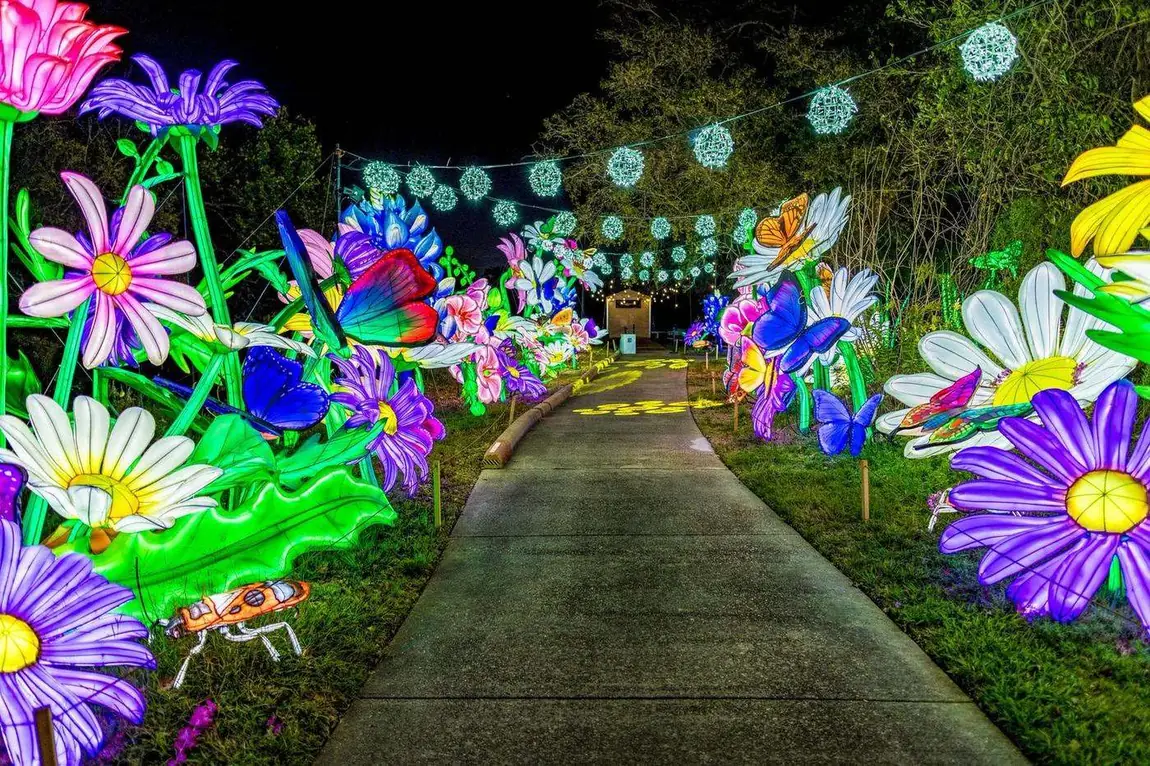
Lights on trees: what is safe and what is not
Do Christmas lights damage trees? It is the question gardens ask most. Light does affect plants, and the practical risk in a seasonal show is usually manageable through design rather than by avoiding trees altogether.
Trees use day length as a signal. Purdue University's forestry guidance explains that a tree does not distinguish between sunlight and artificial light if the wavelength, intensity and duration are supplied, and that photoperiod governs vegetative growth and reproductive activity: extend the light period and the tree reads a longer summer.
Washington State University Extension, summarising horticulturist Linda Chalker-Scott's work, describes the result. Leaves and buds nearest the source perceive an endless summer and keep growing, so that in autumn they stay green while the rest of the tree senesces. When the first frosts arrive those leaves die, and the tree loses the resources it would normally have recovered during senescence. Purdue's guidance also lists woody plants by their relative sensitivity to light pollution, adds that continuous lighting is especially problematic, and a 2025 study in Nature Cities found that artificial light at night affects plants more strongly than temperature does in lengthening urban growing seasons, with blue-rich white LED light especially potent.
The risk is real, and manageable, because every factor that reduces exposure can be pulled on. Duration is the most powerful and cheapest lever: a few evening hours that go dark overnight is a very different exposure from continuous illumination. Spectrum is the second, with blue-rich white light the most biologically active and warmer, amber-rich sources less disruptive. Intensity and distance work together, and Brooklyn Botanic Garden's horticulture team makes the point directly: the LED lighting used for its event is less impactful to begin with, and the impact diminishes with distance, so lights placed mostly at ground level and aimed upward generally are not bright enough to affect the plants. Species and timing are the fourth, since sensitivity varies and a winter show, when many trees are dormant, presents a different risk profile from one in spring.
The fifth lever is which trees get light, and it is a selection decision rather than a technical one: choosing which trees to attach lights to, and which to illuminate from a distance, is a judgement the gardeners should make because they know the collection. Brooklyn Botanic Garden describes selecting suitable trees with its gardeners and the production team, inspecting them beforehand for health. A garden is not only plants: dark-sky guidance documents effects on nocturnal insects, birds and other animals, so a route through the quietest part of a garden creates a problem the planting plan will not reveal.
Two practical rules follow. Do not wrap light strings tightly around a trunk or branch, because bark and cambium can be damaged by constriction as the tree grows and by abrasion in wind. And do not leave lighting installed year-round on a living tree.
Removal timing and site recovery
Anything that went onto protection matting comes off it, in an order that keeps heavy equipment off bare ground. Fills and stockpiles are cleared rather than left. Where grade was disturbed, it is restored, and cable routes are made good.
The timing question is site-specific. Arboricultural guidance favours working around trees when they are least physiologically active, and NPS advice suggests removing trees after leaves have fallen. The analogous principle for a light show is that the least damaging time to work on and around a tree is when it is dormant, and the most damaging is during active growth. No single rule fits every species, site and climate, though: a garden in a mild climate has a different dormant window from one with a hard winter, and an evergreen collection has no leafless season at all, so the removal date is a decision for the horticultural team.
Oregon State University Extension's post-construction guidance recommends follow-up maintenance including mulch, irrigation and soil aeration, supplementary water when rainfall is inadequate, and inspecting trees annually for several years afterwards, because decline often appears late and damage may not be visible for years. That delay is the strongest argument for treating recovery as a planned phase with an owner: who inspects, what they look for, how compacted areas are treated, and how long monitoring runs.
There is one more reason to plan removal carefully: most of what a light show puts on site is designed to come back, and protecting the site and protecting the asset are the same operation done properly. How long a build can keep returning is covered in our guide to how long lantern displays last.
Questions to settle with your horticultural team before the brief
Who owns tree protection on this project? Name the person and confirm they can stop work, not just advise.
What protection area are we working to, and on whose authority? Get the figure in writing with the standard behind it, because the definitions genuinely differ.
Which routes are approved for heavy equipment, and what happens when the ground is wet? A defined route, a defined staging area and an agreed wet-weather rule remove the on-the-day judgement that causes most compaction.
Which trees may be lit, and which may not? Make this an explicit list produced with the gardeners, covering attachment and distance illumination.
What is the removal date, and what is the recovery plan? Set both before the build, including who monitors and for how long.
A manufacturer's role is to build to the site rather than to a catalogue: quoting against a real survey, offering fixing options that respect the protection areas, routing cable around beds rather than through them, and being willing to say a proposed position is wrong.
If you are planning a show inside a collection and want to work through the site constraints before the design is fixed, send us your site plan and survey. We build for gardens, and we would rather discuss the root zone than discover it. Two useful starting points: how a botanical garden light show is planned around planted ground from first sketch to opening night, and what a turnkey festival service covers end to end. For installed routes in practice, see the city park light trail and the themed garden lanterns projects.