A grove at double scale
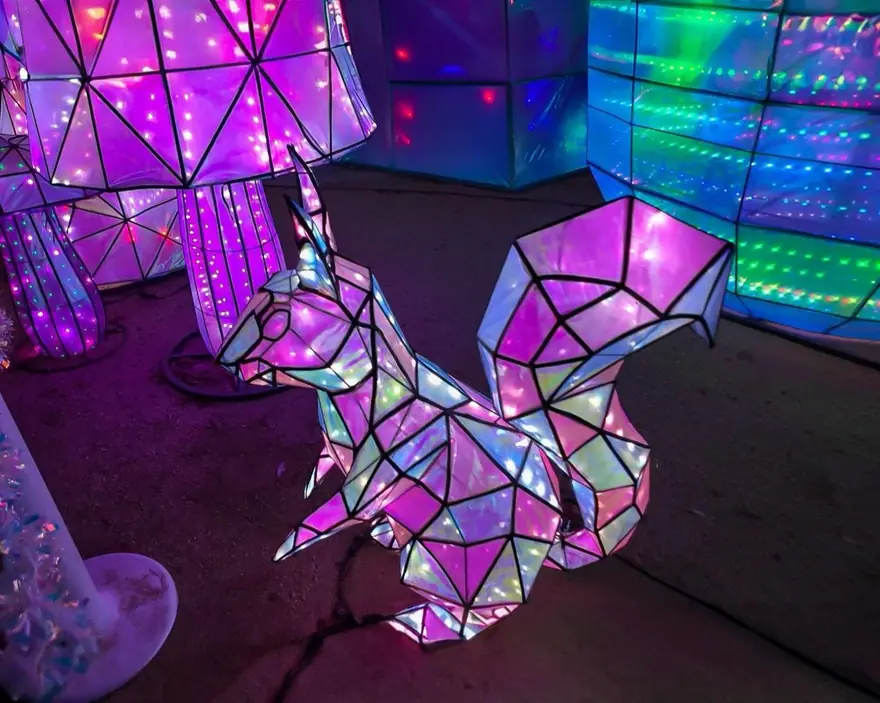
The garden is a cluster of giant mushrooms built at two times life size, so the caps hang above head height and the stems form a canopy the visitor walks beneath. The mix of sizes is deliberate: tall stems at the back, shorter ones toward the path, which gives the grove depth and stops it reading as a row of identical objects. From outside the group looks like a glowing thicket; inside, the visitor is enclosed, which is the effect that makes a small footprint feel like a whole world.
Light from under the caps
Each cap is lit from underneath, so the glow spills down the stem and pools on the ground rather than washing the top. That under-light is what makes the mushrooms look like they are glowing from within, and it keeps the floor of the grove lit enough to walk safely without a separate ground fixture. The caps are separate zones, so the grove can pulse from one side to the other as a slow wave that leads the visitor deeper in.
A stepping path through the stems
The visitor route is a stepping path that weaves between the stems rather than cutting straight through, which slows people down and keeps them inside the scene longer. The path is wide enough for a pram or a wheelchair and marked at the edges so it reads in the dark, with the lighting kept low as part of the dimmable scene total. That meander is what creates dwell time and stops the queue from bunching at the entrance.
Re-assembling the grove
The mushrooms ship as segment-linked frames, each stem and cap as a named part that bolts together on site. Re-assembly follows the layout plan so the tall back row goes in first and the path edges last, which keeps the walking line clear while the structure rises. Between seasons the silk caps are removed and rolled and the steel frames store flat, ready to be re-dressed in the same scheme the following year without rebuilding the geometry.
Planting the grove by the plan
The grove is laid out from the site dimensions the buyer supplies, so the tall back row is set first and the shorter path-edge pieces follow. On site the tall back row goes in first and the path edges last. Each cap is its own dimmable zone, so the venue runs a slow wave or holds the grove steady.