The anchor figure of a safari trail
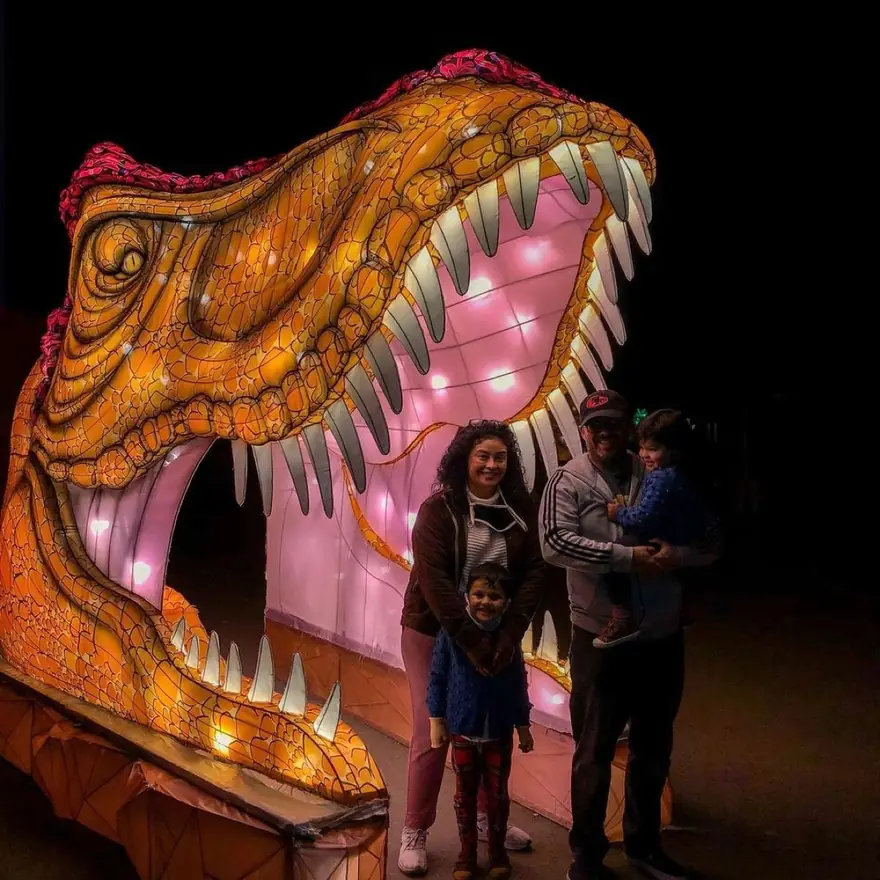
A dinosaur trail needs one figure that children recognise from a distance and walk toward, and the Roaring T-Rex is built for that role. In a rearing stance it reads as a single large object across a plaza or park, and the silhouette is shaped so the head and open jaw are the first thing a visitor sees. As the anchor piece it carries the crowd flow, so the motion and sound are tuned to draw people in rather than startle them.
Jaw and head motion
The actuated movements are a jaw open and close and a slow head sweep, both driven by a 24V DC motor through linkage. The jaw is the headline: an opening mouth turns a static predator into one that is about to act, which is the photograph parents want. The head sweep adds life at close range, letting the figure appear to follow the crowd. Linkage drive was chosen because it gives a repeatable, smooth motion with no air supply and few sealed parts to fail outdoors.
The roar as a separate layer
The sound module is a separate function from the motion, played through a speaker sized to the site. It can be triggered by a sensor as visitors approach or run on a loop, and the volume is set during commissioning. Keeping sound apart from movement means a venue can run the rex lit and still during quiet hours, then add the roar at peak times without touching the mechanism.
Keeping the mechanism serviceable
Every moving part on the rex is IP-rated for outdoor duty, and the build is rated for -30 C to +50 C. In frost or heavy rain the motion and sound can be paused from the controller, leaving the figure illuminated and still. The jaw and neck drives are mounted in a service bay inside the chest, so a technician can reach them through a removable panel instead of unwrapping the figure, and wear parts are replaceable on site. ## Siting a figure this large
The T-Rex needs a level base pad and a clear approach that lets visitors see the whole figure rather than just the chest, so it is normally placed at the end of a straight run or in a widening of the path. The power position and controller need to sit within cabling reach, and the sound module is aimed away from the nearest dwelling where the site is near housing. We confirm the viewing direction, the base detail and the power drop during quoting, and the frame is built to those site dimensions before production begins.