A lantern festival is not finished when the last panel is painted — it is finished when the crates arrive at your venue, on schedule, with customs cleared and nothing missing. International freight is where inexperienced suppliers quietly fail: documents with wrong harmonised codes, crates that do not fit container doors, and "surprise" duty invoices landing on the buyer after delivery.
This guide walks through the actual chain — from our workshop floor in Zigong to your install team's hands — and explains why the shipping term on your contract matters more than most buyers realise.
First, the Vocabulary: FOB, CIF, DDP
Shipping terms (Incoterms) define exactly where the supplier's responsibility ends and yours begins. The three you will see quoted:
- FOB (Free On Board) — we deliver the crated goods onto the vessel at a Chinese port. You own the freight, insurance, destination customs and every cost and risk from that moment. Cheapest headline price, most work and most risk for the buyer.
- CIF (Cost, Insurance, Freight) — we pay freight and marine insurance to your destination port. You still handle customs, duties and inland delivery. Port-to-port, not door-to-door.
- DDP (Delivered Duty Paid) — we handle everything: export clearance in China, ocean freight, insurance, destination customs, duties and taxes, and delivery to your venue. One contract, one price, one accountable party.
We quote DDP as standard for one reason: it removes the two failure points that damage lantern projects most — customs documentation errors and uncoordinated last-mile delivery. When one team owns the whole chain, the crates cannot arrive with a duty bill attached and a phone number that no longer answers.
How Lanterns Are Packed for a 10,000-Kilometre Journey
Every build is engineered for transport from the first drawing, not packed as an afterthought:
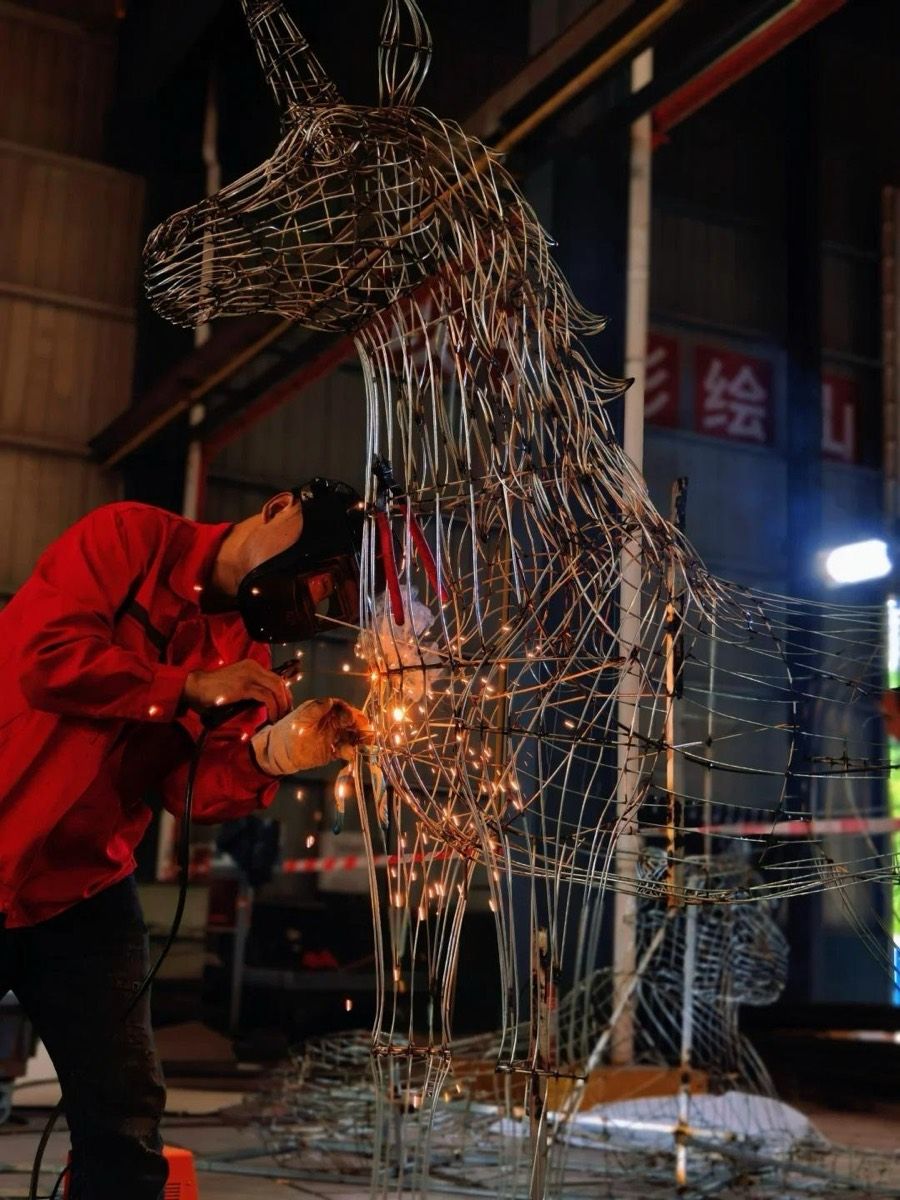
- Segment-linked frames. A 20-metre dragon does not ship as a 20-metre object. Frames bolt apart into segments sized for container loading, with welded lifting points for on-site reassembly.
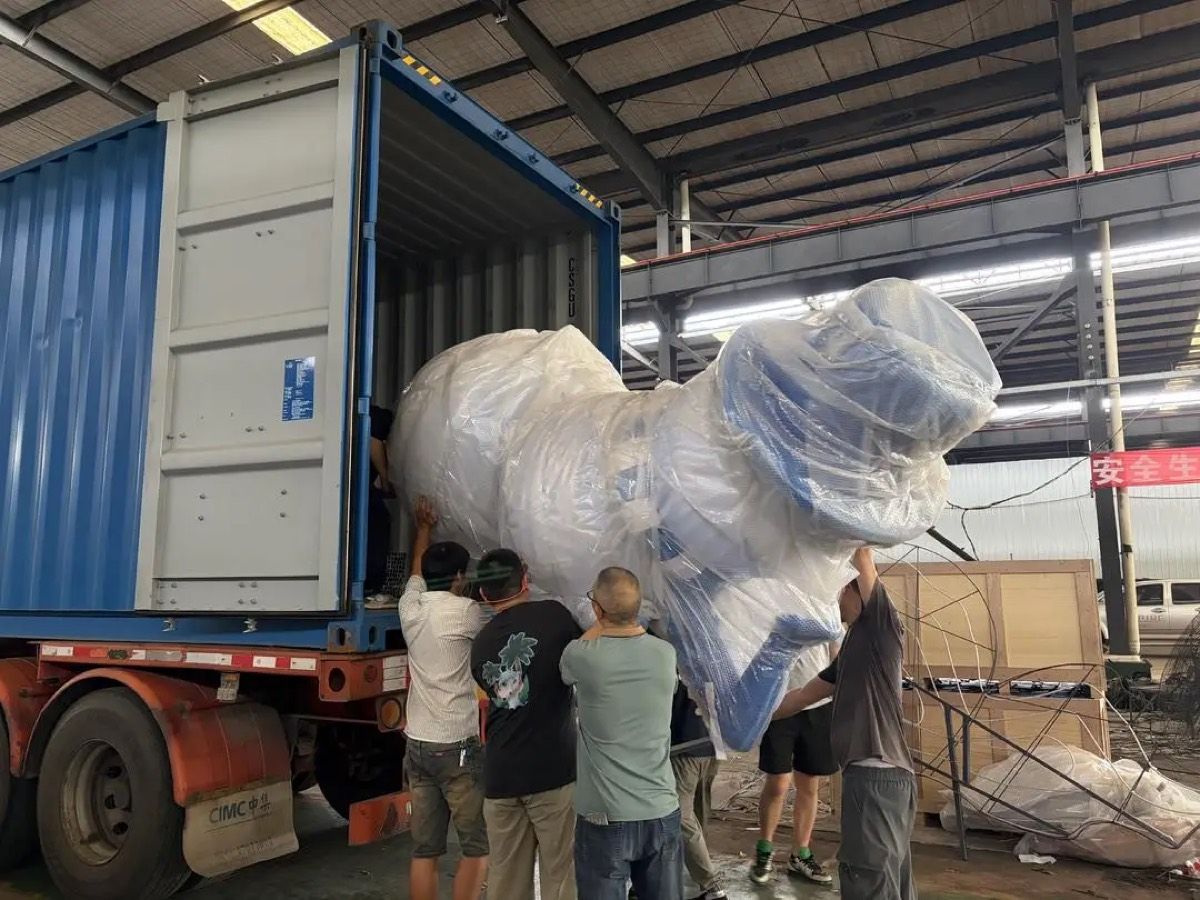
- Custom export crates. Each segment travels in a purpose-built wooden crate with foam bracing, moisture barrier and interior securing. Crates are stamped, numbered and matched to the packing manifest.
- Fabric and electronics protection. Silk panels travel flat-packed with interleaving; LED systems ship in their own compartmentalised boxes with the spare-parts kit.
- Container loading plan. Crates are sequenced so that the first items needed on site (entrance arch, distribution boards, install tools) load last and come off the truck first.
The unloading sequence matters more than people expect. When crate one off the truck is the entrance arch and crate two is the wiring kit, your install team starts work an hour earlier. That planning is part of the shipment.— Site Manager, Nordic Winter Festival
The Document Pack That Clears Customs
Customs delays are almost always document failures. Under DDP, our export team prepares and verifies the complete set before the container moves:
- Commercial invoice and detailed packing list (per crate, per item)
- Bill of lading, matched to the container seal number
- Certificate of origin, where your trade agreement reduces duty
- Harmonised system codes, applied per component — not one catch-all code
- Fire-retardant and electrical compliance certificates, for destination inspection
The harmonised codes deserve attention: misclassified decorative lighting is the single most common trigger for customs holds and retrospective duty re-assessment. This is quiet, unglamorous expertise — and it is exactly what a trading company without export experience cannot provide.
The Realistic Timeline
For a typical full-festival shipment from Zigong to Europe or North America:
Door-to-door, budget 5—7 weeks from production sign-off to crates at your venue, sailing from Chongqing, Shanghai, Shenzhen, Qingdao or Guangzhou depending on vessel schedules and your destination — with air freight as the exception for small urgent shipments. The critical planning implication: your opening date must be built backwards from the ocean schedule, which is why we fix the freight booking before production starts, not after it ends.
Insurance, and What It Should Cover
Marine cargo insurance is priced as a small percentage of freight value and covers physical loss or damage in transit. Under DDP we arrange all-risk cover as standard; under FOB the buyer often discovers too late that "the supplier's insurance" ended at the port of loading. If you are comparing quotes across Incoterms, compare the point at which risk transfers — a price difference of a few percent can hide a five-figure uninsured exposure.
The Questions to Ask Any Supplier
- "Which Incoterm is this price, and where exactly does risk transfer to me?"
- "Who classifies the goods for customs, and who pays if the code is wrong?"
- "Show me a packing manifest and loading plan from a past project"
- "What insurance covers the shipment, from where to where?"
- "If the container misses the vessel, what is the recovery plan for my opening date?"
We ship DDP as standard because a festival's riskiest kilometre should not be the buyer's problem. Ask us about freight planning for your timeline →